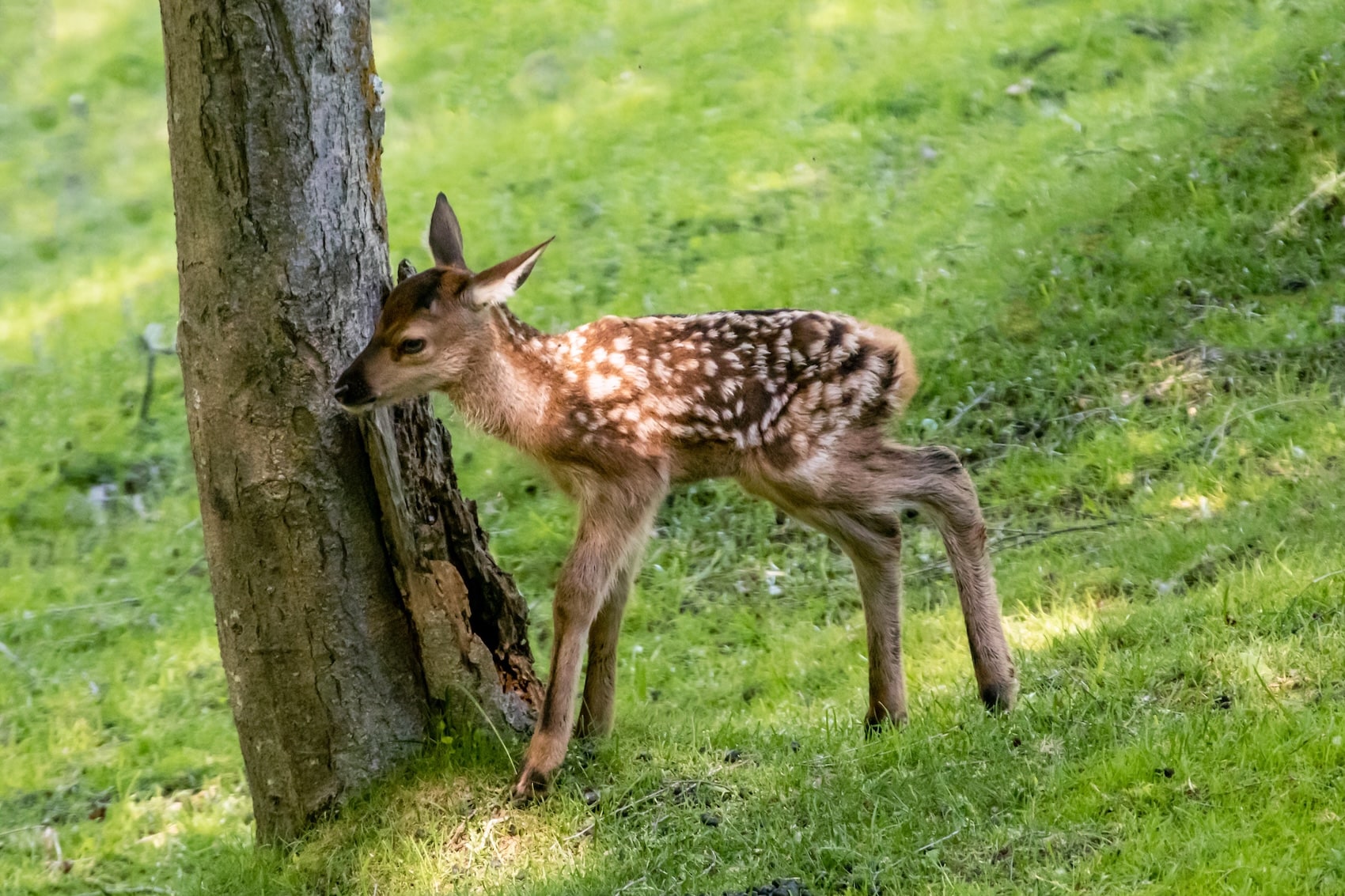
The juvenile coat, up to about 3 months, is reddish brown, with white spots on the back and sides (pomellatura) ar- ranged irregularly. This coloration allows the young to better camouflage themselves and escape the eyes of predators.
Description
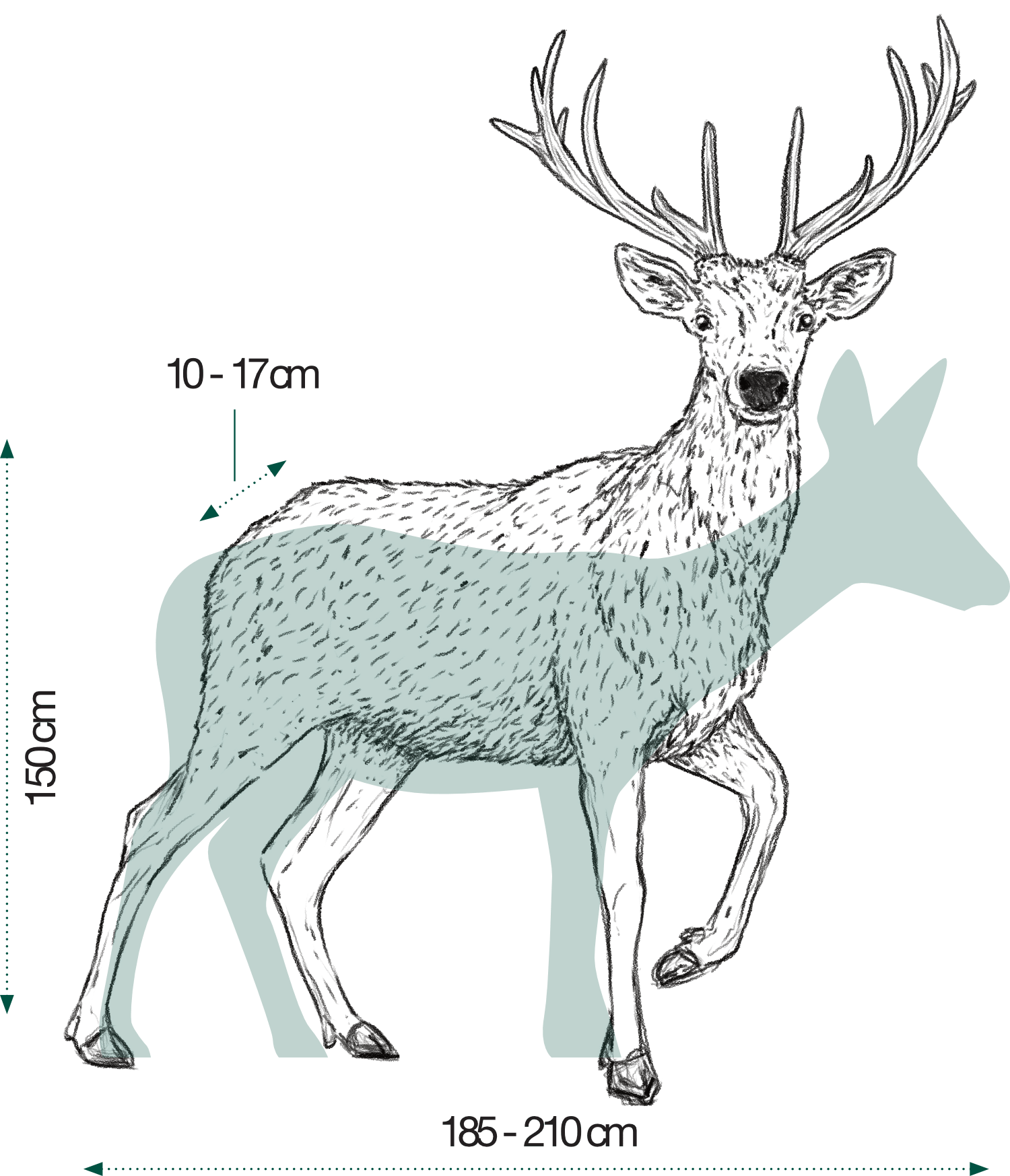
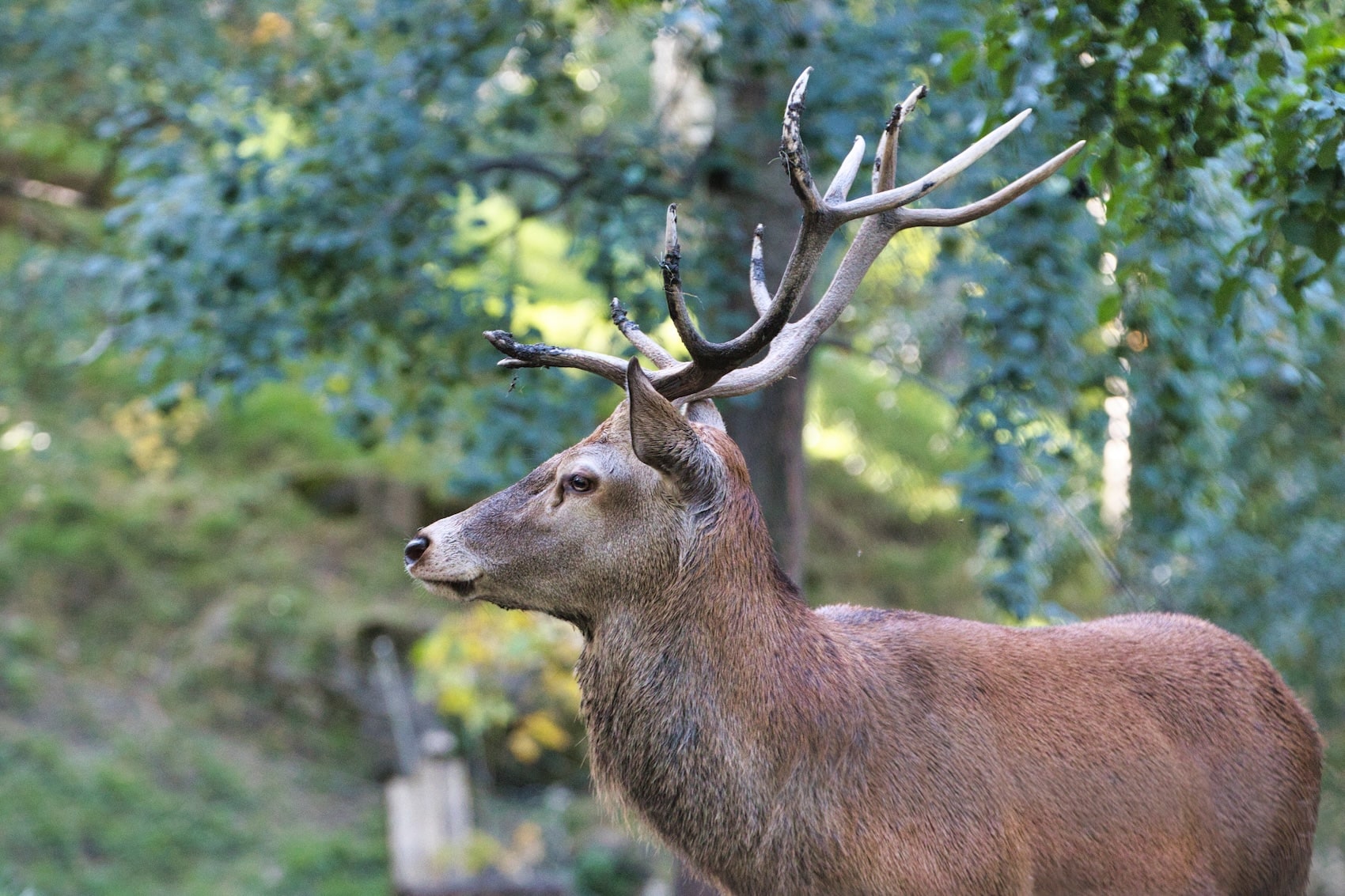
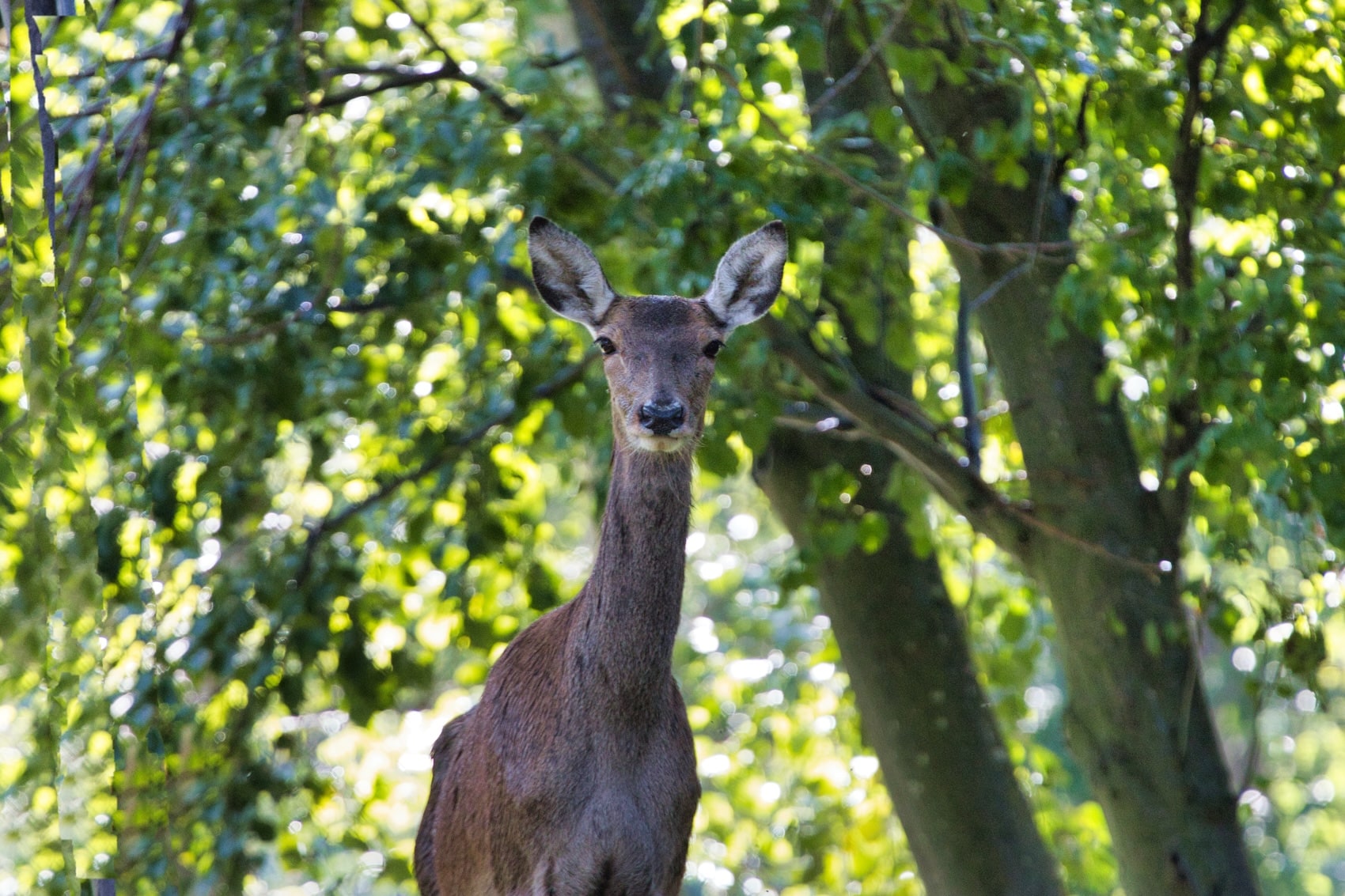
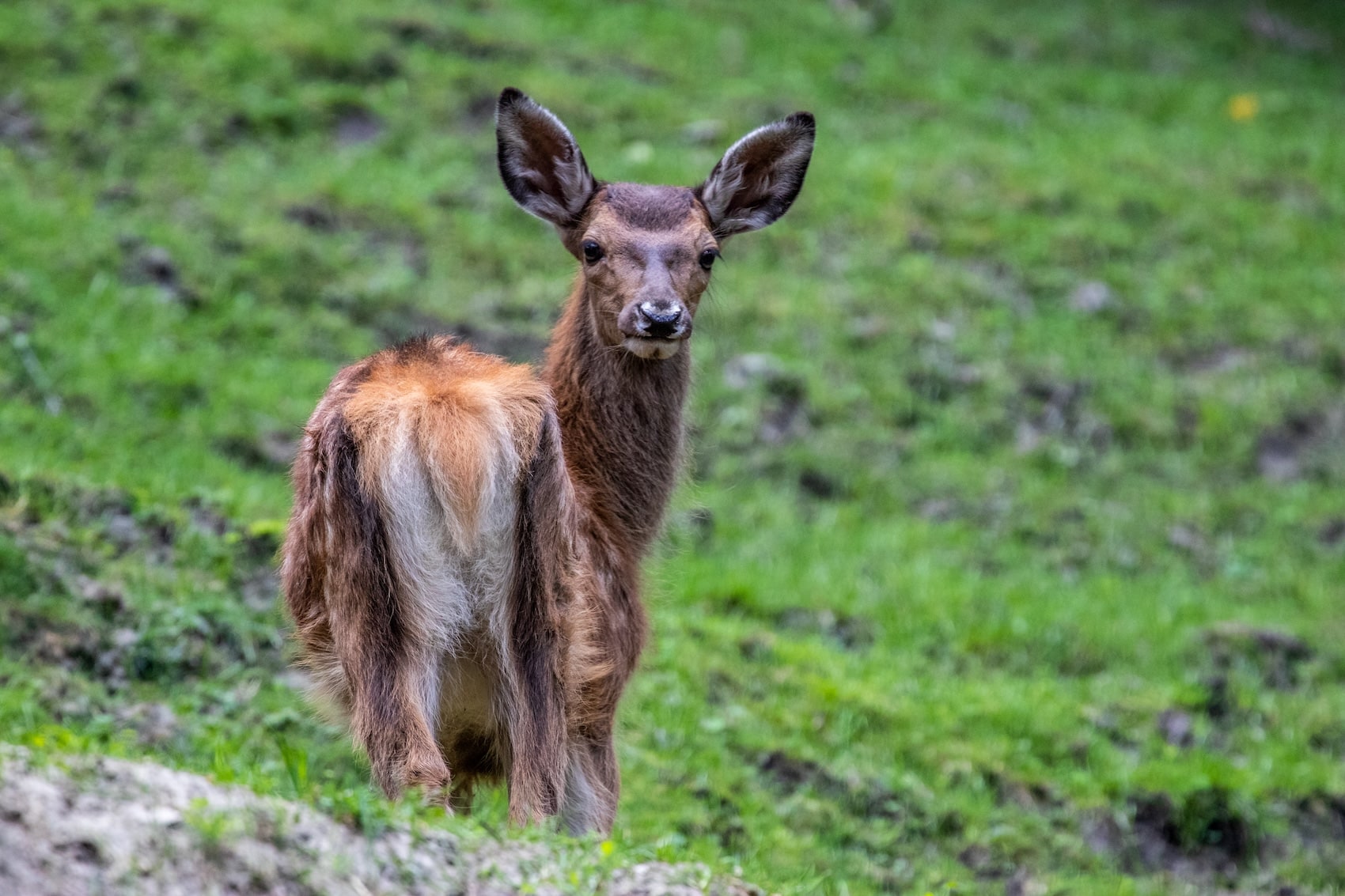
Anatomy: The European deer is the largest Italian cervid. It is characterized by a marked sexual dimorphism, both for the presence of antlers in the males and for a consider- able difference in weight between male and female. It has a compact and robust body, a medium-sized head that is elongated into a square snout at the ends, large and oval eyes, and large ears.
Teeth: The adult deer has 32/34 teeth composed of incisors, canines, premolars and molars. The age is estimated by checking the wear of the teeth.
Coat: In winter, the coat consists of a thick and long fur with a brown-grayish coloring, while in summer the thinner and shorter fur is of a uniform red-brown color. It has a lighter-colored anal patch on which the short tail stands out, similar in color to the coat.
Habitat / Habits
Habitat: Large forest complexes with open areas at the edges, good internal refuge areas and feeding areas; tends to avoid overly fragmented forests. It needs water to drink and to bathe, in order to protect itself from the heat and to get rid of parasites.
Habits: Visible especially at dusk, but active all day, with 3-6 distinct periods of grazing and rumination.
Reproduction
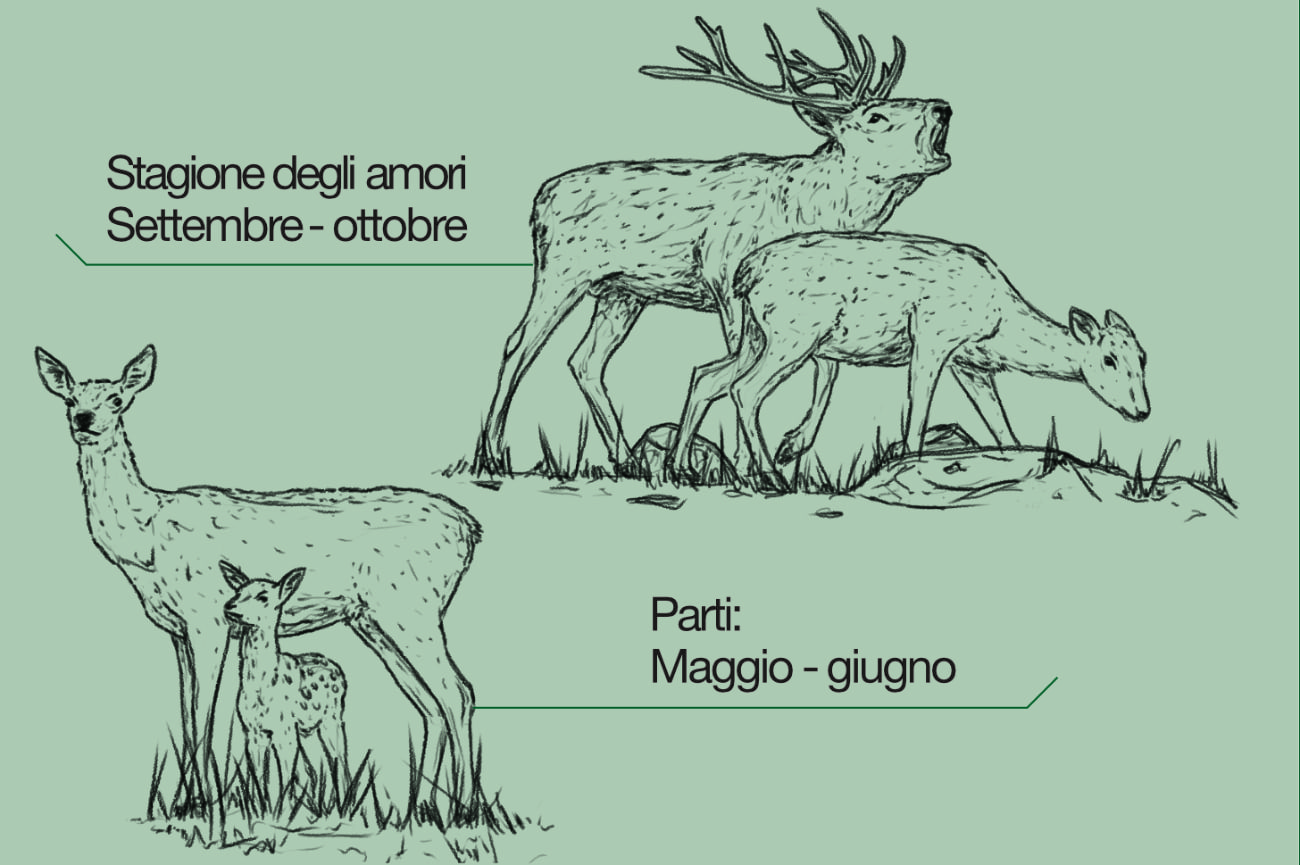
Species: Polygamous Sexual maturity: 2 years Reproductive period: September – October Gestation: 236 days (about 7 – 8 months) Births: May – June Number of cubs: 1
Diet
Herbivorous In autumn/winter it eats dry grass, wild fruits and when these begin to become scarce, tree bark.
In spring/summer it feeds on various forage species, wild fruits, foliage, buds and conifer tips.