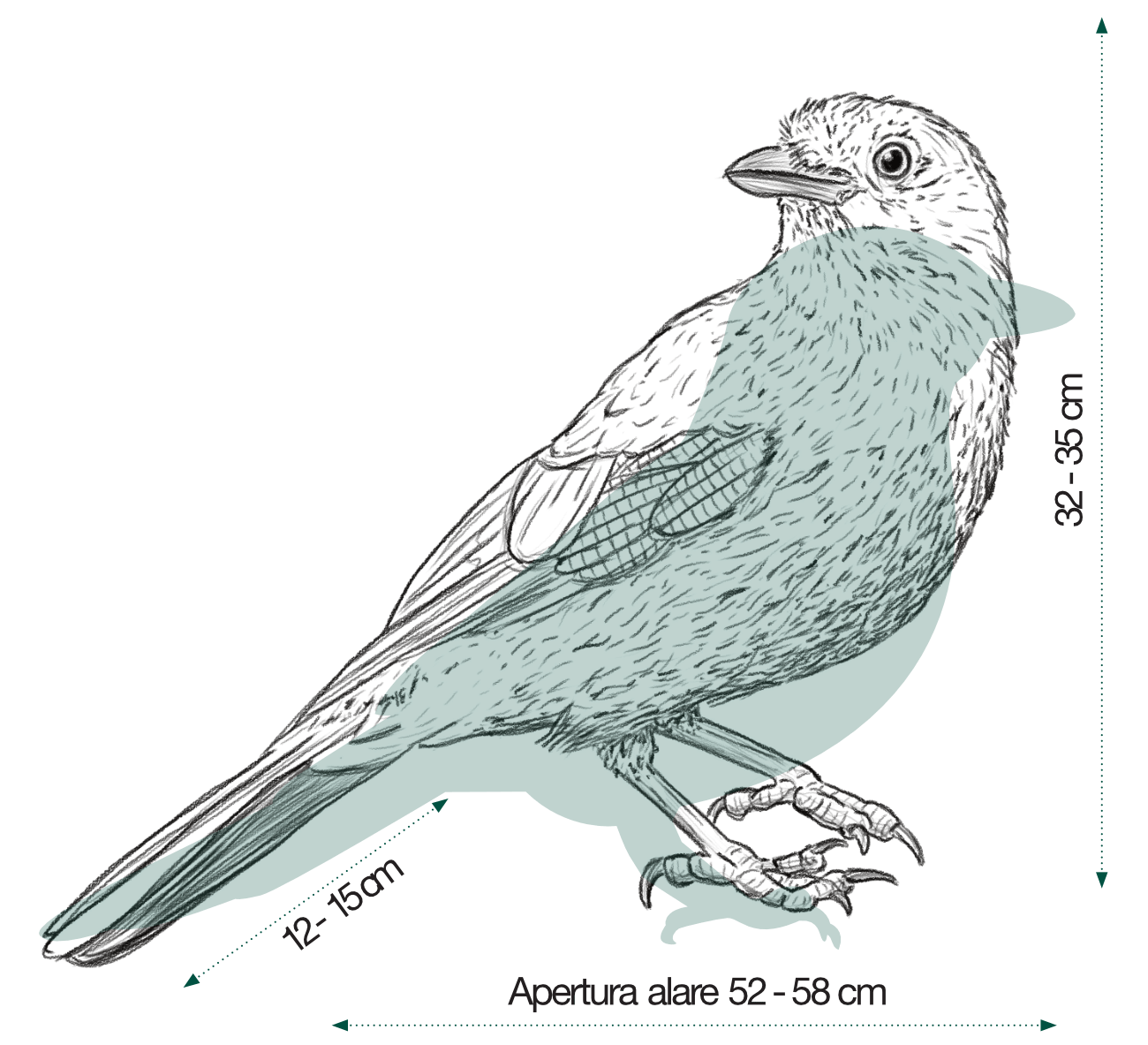
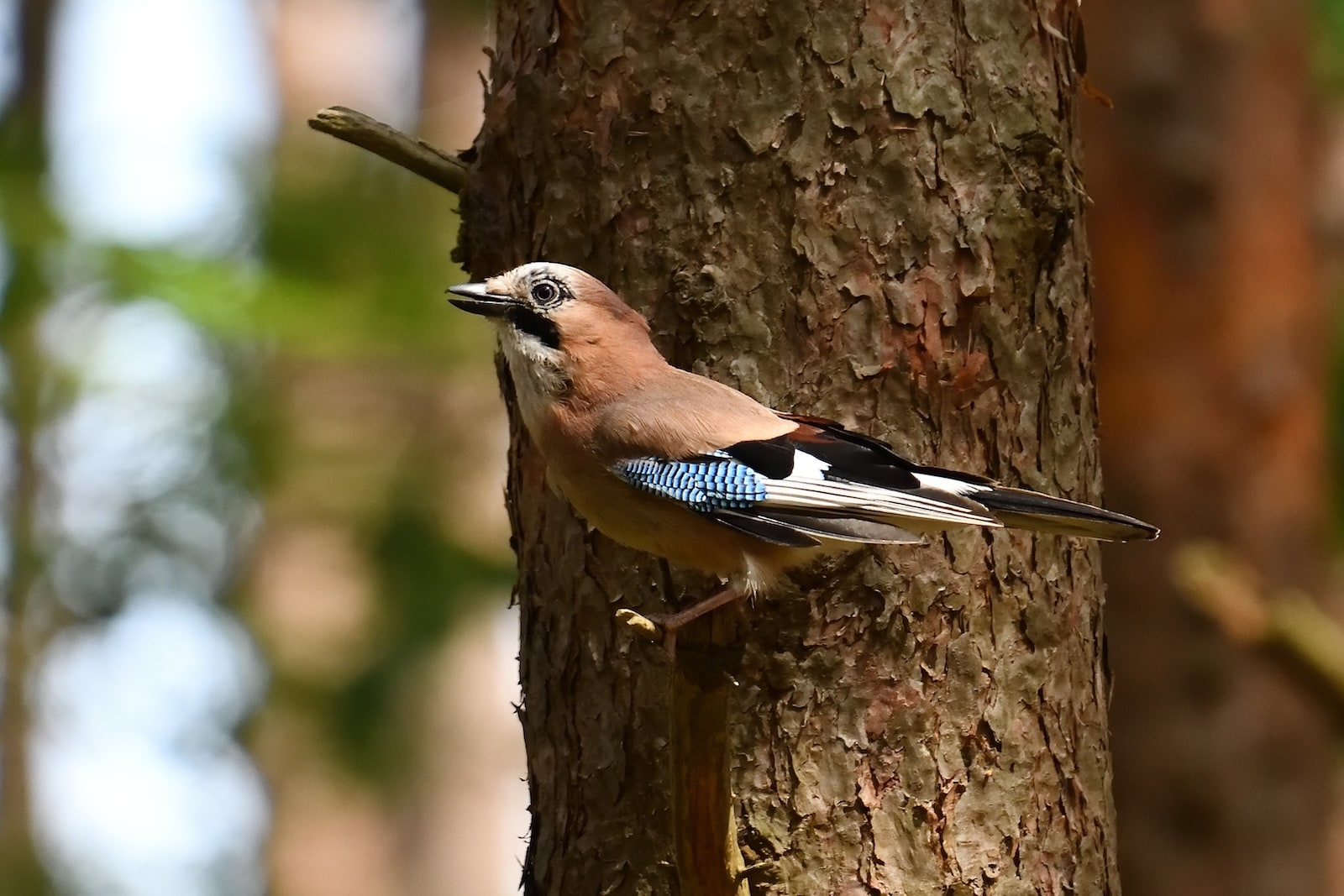
Anatomy: A medium-sized corvid with a slender body, broad wings and a relatively long tail. It has a pale head with black streaks; a distinct blue wing mirror with barring. It has a sturdy beak and legs adapted to a tree-dwelling lifestyle.
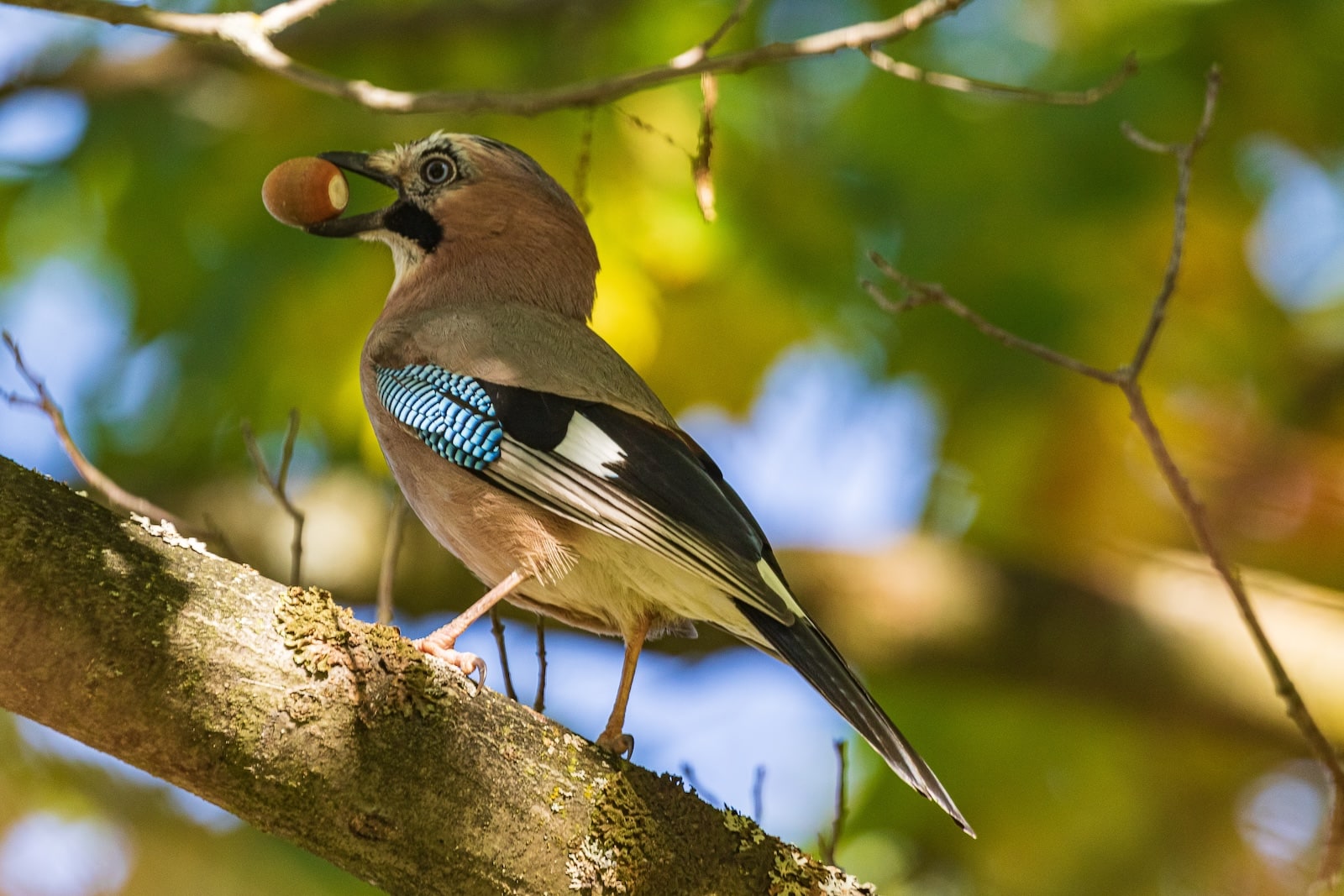
Beak: Strong and pointed, suited to an omnivorous diet; used to handle seeds and acorns.
Plumage: Pinkish-brown with black and blue wings; black tail and white rump. This colouring helps it blend into the woodland environment.
Habitat / Habits
Habitat: It loves deciduous and mixed forests, but also adapts to urban parks and gardens with abundant vegetation.
Habits: Diurnal, agile and lively, it often moves between branches or on the ground to look for food. It is known for hoarding supplies, especially acorns, which it hides in various places.
Reproduction
Species: Monogamous Sexual maturity: 1 – 2 years Mating season: March – April Eggs hatching period: 16 – 19 days Births: May – June Number of eggs: 4 – 7
Diet
Carnivorous Mammals: mice, squirrels. Other animals: small birds, amphibians, reptiles and insects.