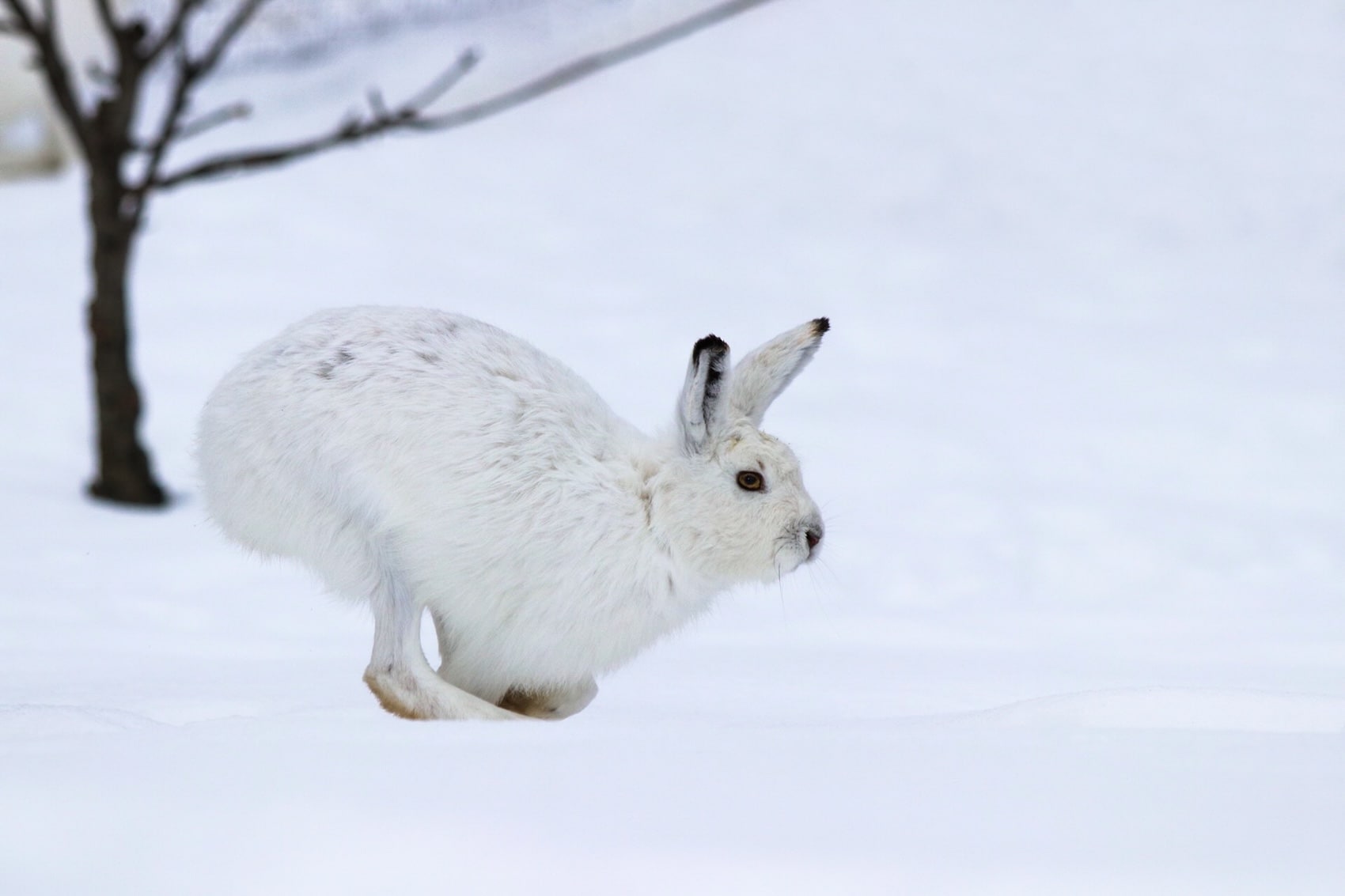
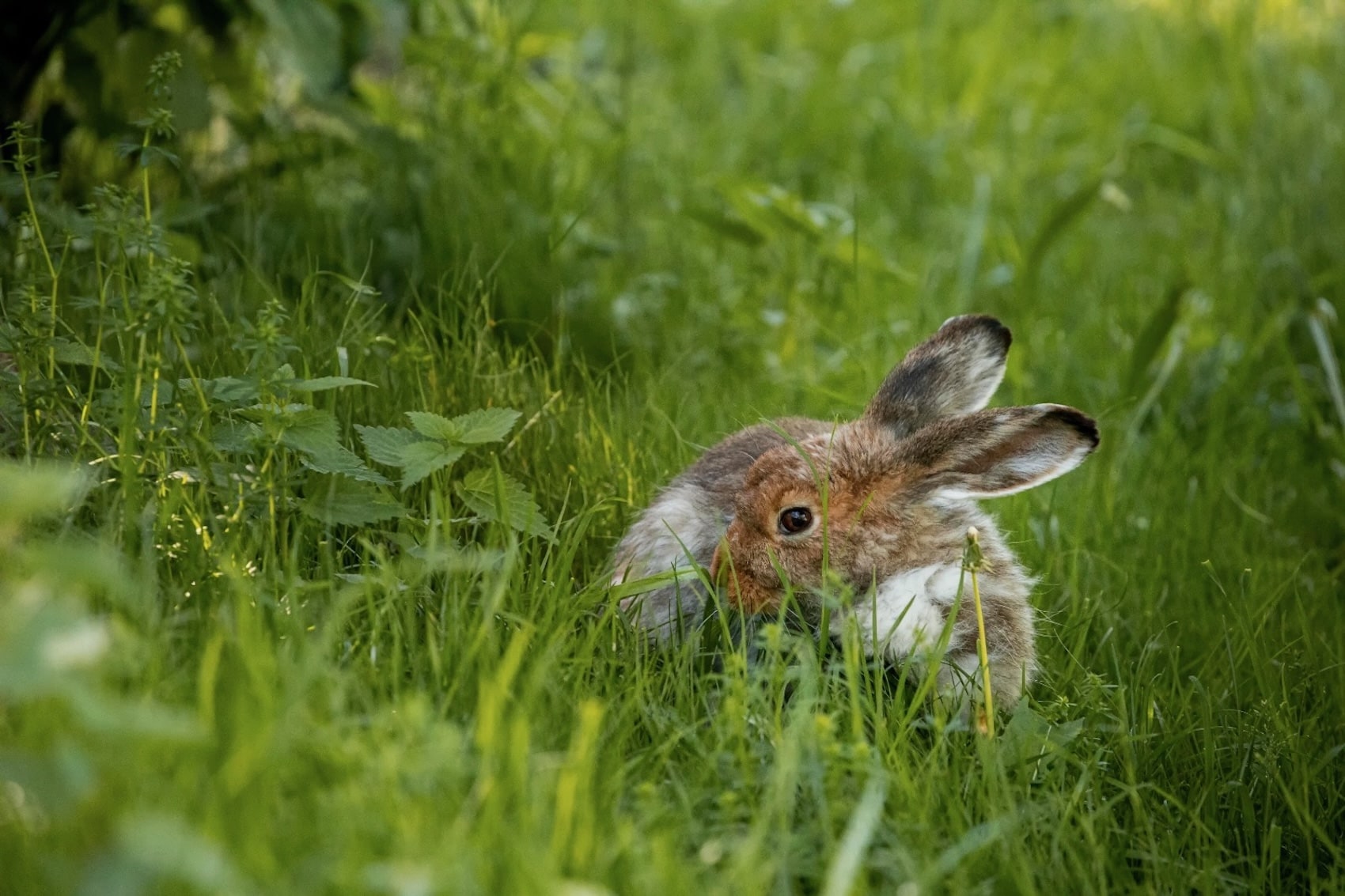
For a long time, hares and rabbits were mistakenly considered to be rodents. Today, they belong to the Leporidae family. Unlike rodents, members of the Leporidae family cannot grasp objects with their front paws.
Description
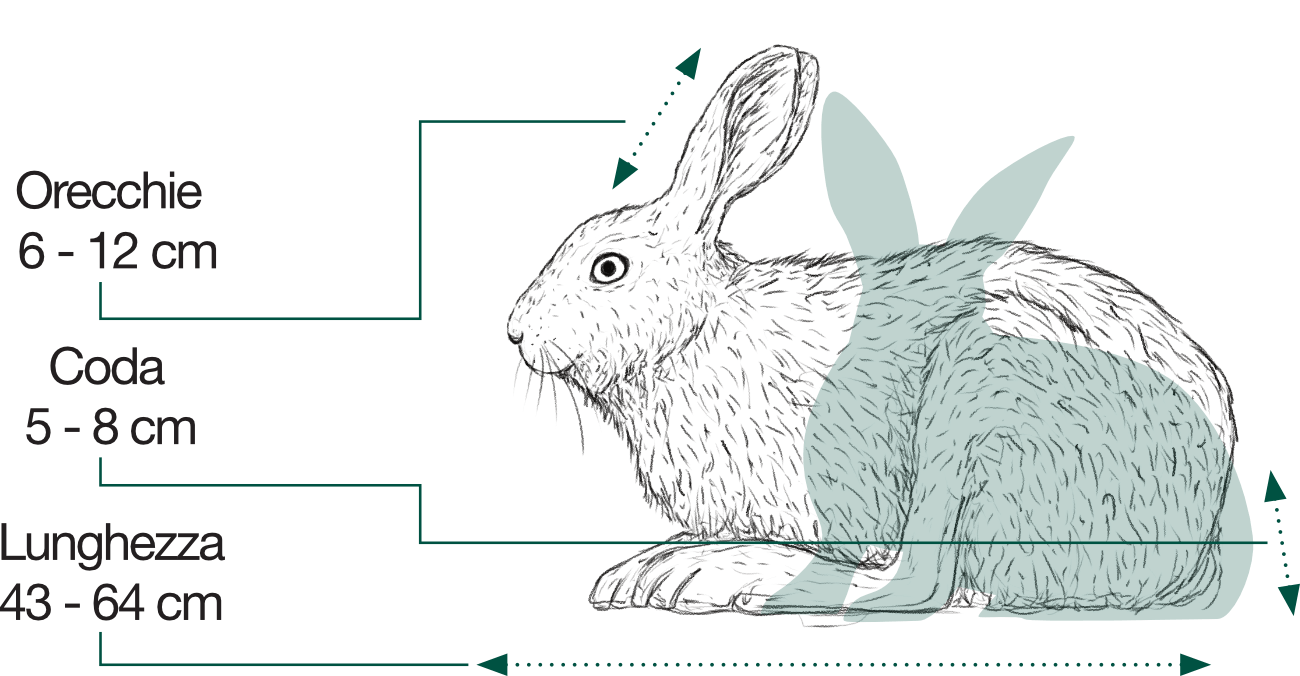
Anatomy: The snout is characterized by two large yellow eyes placed on the sides of the head, this position allows the animal to have a very wide field of vision. Its sense of hearing is particularly developed: the mobility of its long ears allows it to perceive and locate even the slightest noises. It is a rather slender animal, with longer hind legs than the front ones, a peculiarity that gives it the speed and ability of a great runner and jumper.
Teeth: The dentition is composed of 28 teeth; the presence of four highly developed incisors stands out.
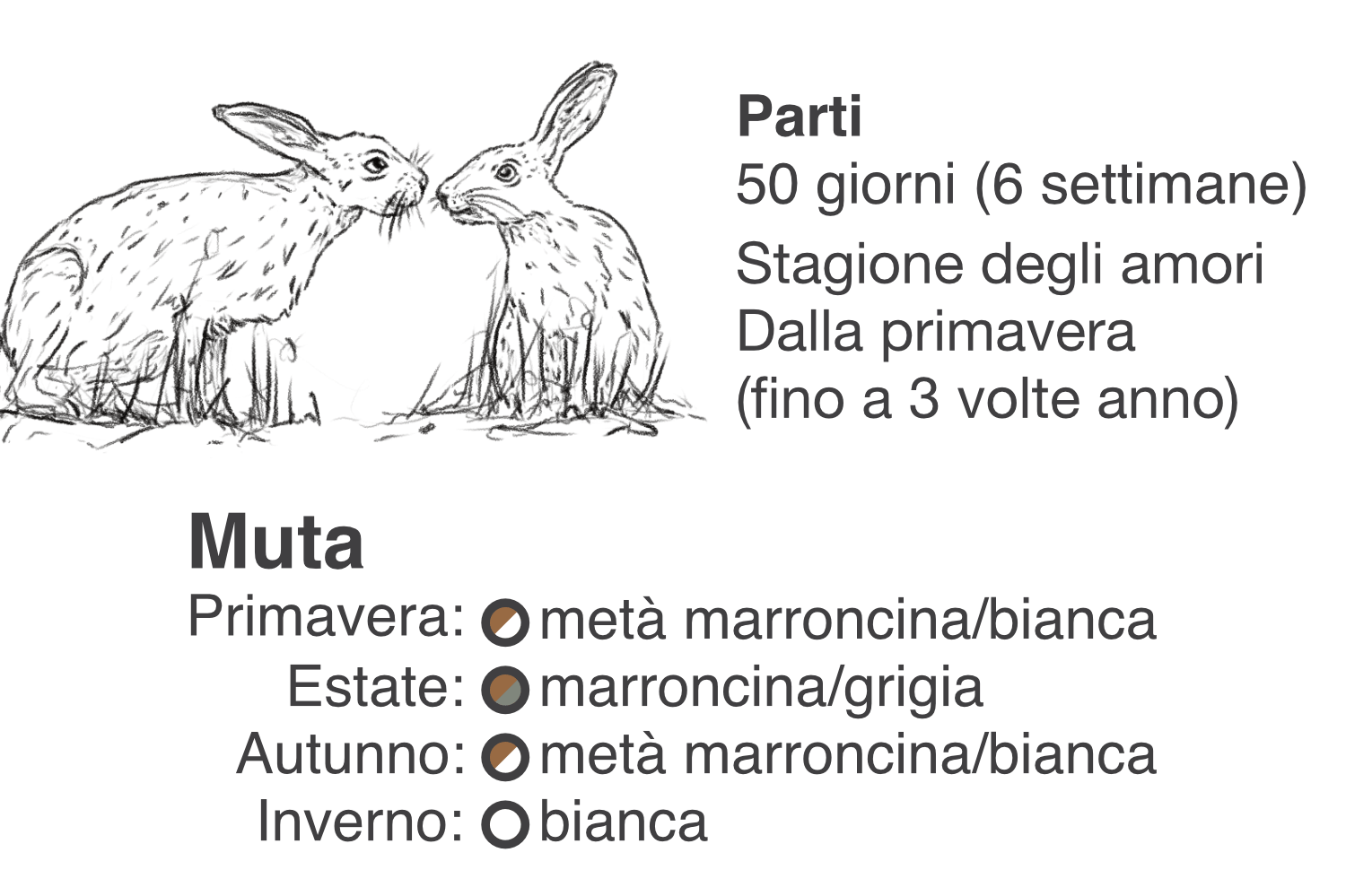
Coat: It camouflages itself with the environment in every season: in summer the fur is reddish-brown on the back and white on the belly, in winter it becomes totally white with the sole exception of the tip of the ears that remains black. The change of coat is stimulated by the period of daily lighting and the ambient temperature.
Habitat / Habits
Habitat: It is a typical inhabitant of sparse forests and tundras. In the Alps, it frequents the bushes and heaths, the high pastures and the alpine tundra, going as far as the nival zone; it is also present in the forest belt of both conifers and broad-leaved trees.
Habits: The mountain hare has mainly nocturnal habits. During the day, it rests hidden in crevices of the ground, under rocks or boulders or even in the thick of the bush.
Reproduction
Species: Poligama Sexual maturity:1 year Reproductive period: from spring (up to three times a year) Gestation: 45 days Births: late spring Number of cubs: 1-6
Diet
Herbivorous In summer, it feeds on herbaceous plants, leaves, fruits, cereals and mushrooms; in winter, dry grasses and bark of trees and shrubs. The hare has a double digestion of food to extract as much energy as possible from a herbivorous diet. After ingesting the food, it expels it in the form of soft, greenish feces with a gelatinous consistency. These are ingested and digested again, and then expelled as hard, dark-colored feces.
Common hare
[ Lepus europaeus ]
Classification
Kingdom:
animalia
Phylum
chordata
Class:
mammalia
Order
lagomorpha
Family
leporidae
Genus
lepus
5
years in nature
10
years in captivity
Female
2,5-5 kg
Male
2-4,5 kg
Maximum speed
70 km/h
Verse
Fischio/ Squittio
Curiosity
The hare’s athletic abilities.
The common hare is capable of leaping up to 3 metres in length and 2 metres in height. To escape predators, in addition to its incredible speed (70 km/h), it also makes use of rapid changes of direction, which make it difficult to catch.
Description
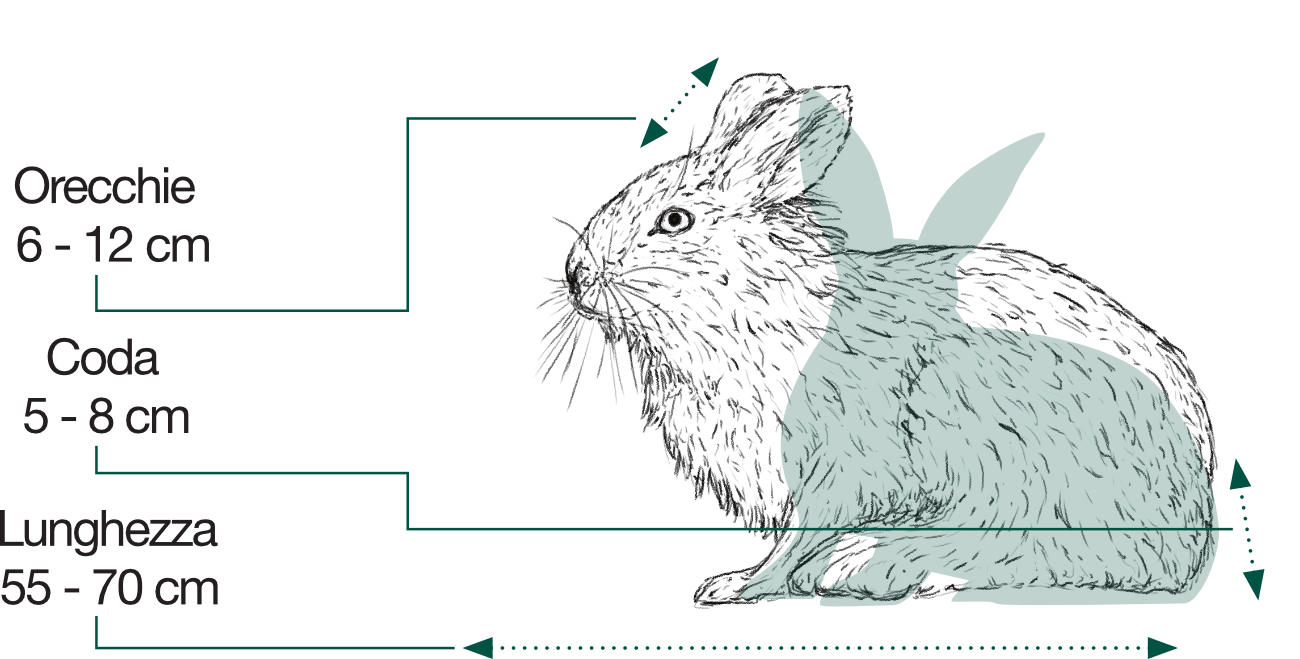
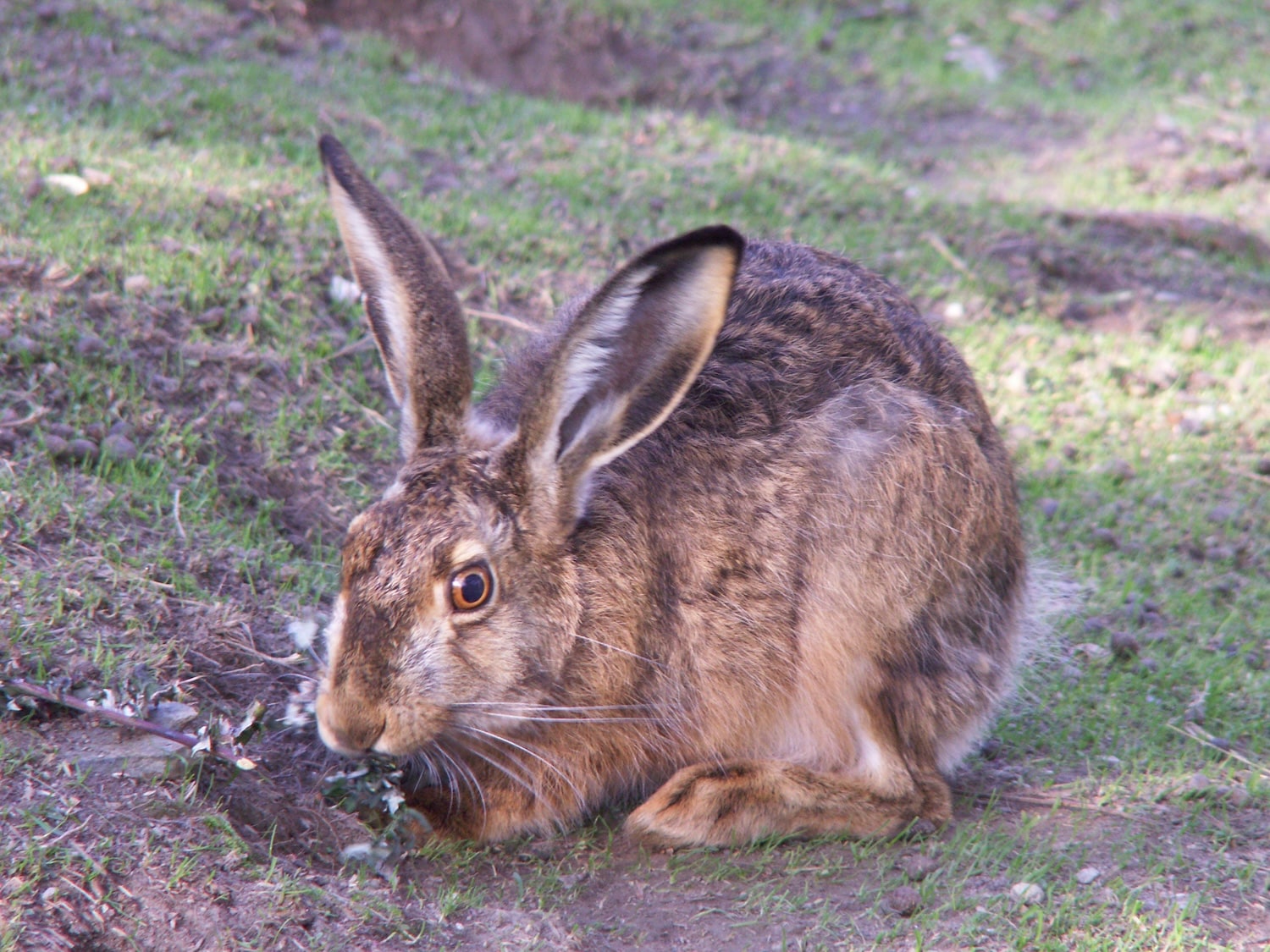
Anatomy: The elongated, tapered snout features two large, laterally positioned eyes, which provide a 360° panoramic view. Its highly developed hearing allows it to detect the arrival of predators from a great distance. The body is artic- ulated and aerodynamic, with the hind legs longer than the front ones, giving the hare extraordinary strength and speed.
Teeth: The dentition consists of 28 teeth, with incisors capable of cutting vegetation and molars/premolars for grinding it.
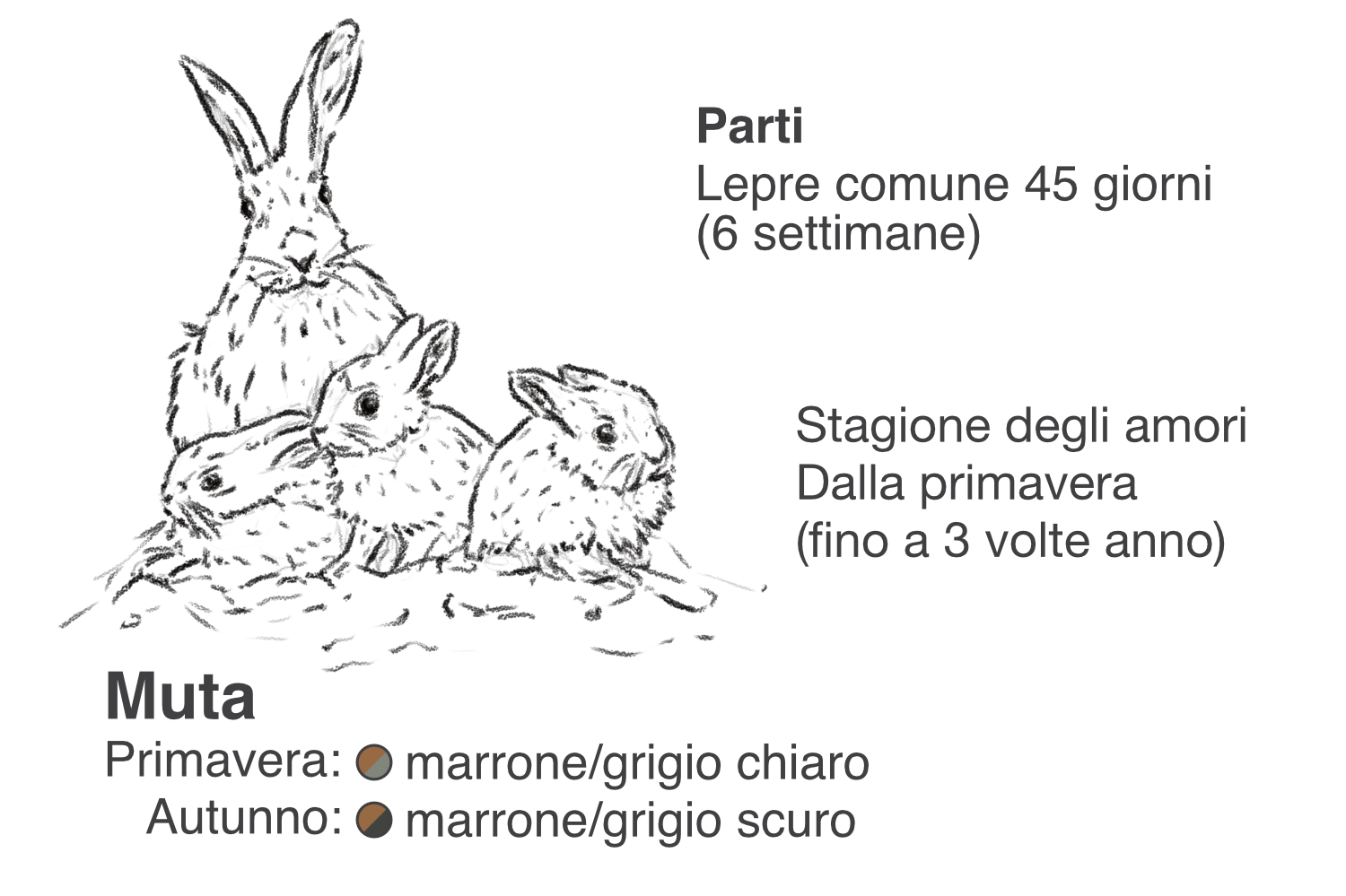
Coat: The coat of the common hare is brown or light gray in summer, with a lighter underside, while in winter it becomes darker and thicker. This coloration allows it to blend in effectively with its environment, both during the hot and cold seasons.
Habitat / Habits
Habitat: It prefers hilly, flat and mountainous environments, frequenting open and wide spaces such as cultivated land, marginal wooded areas, meadows, pastures and agricultural areas.
Habits: A solitary animal that alternates between daytime and nighttime activity, with peaks of activity at sunset and at night. During the day, it takes refuge in temporary nests in tall grass or bushes, where it rests and hides from predators.
Reproduction
Species: Poligama Sexual maturity:1 year Reproductive period: from spring (up to three times a year) Gestation: 50 days Births: late spring Number of cubs: 1-4
Diet
Herbivorous In summer, it feeds on herbaceous plants, leaves, fruits, cereals and mushrooms; in winter, dry grasses and bark of trees and shrubs. The hare has a double digestion of food to extract as much energy as possible from a herbivorous diet. After ingesting the food, it expels it in the form of soft, greenish feces with a gelatinous consistency. These are ingested and digested again, and then expelled as hard, dark-colored feces.