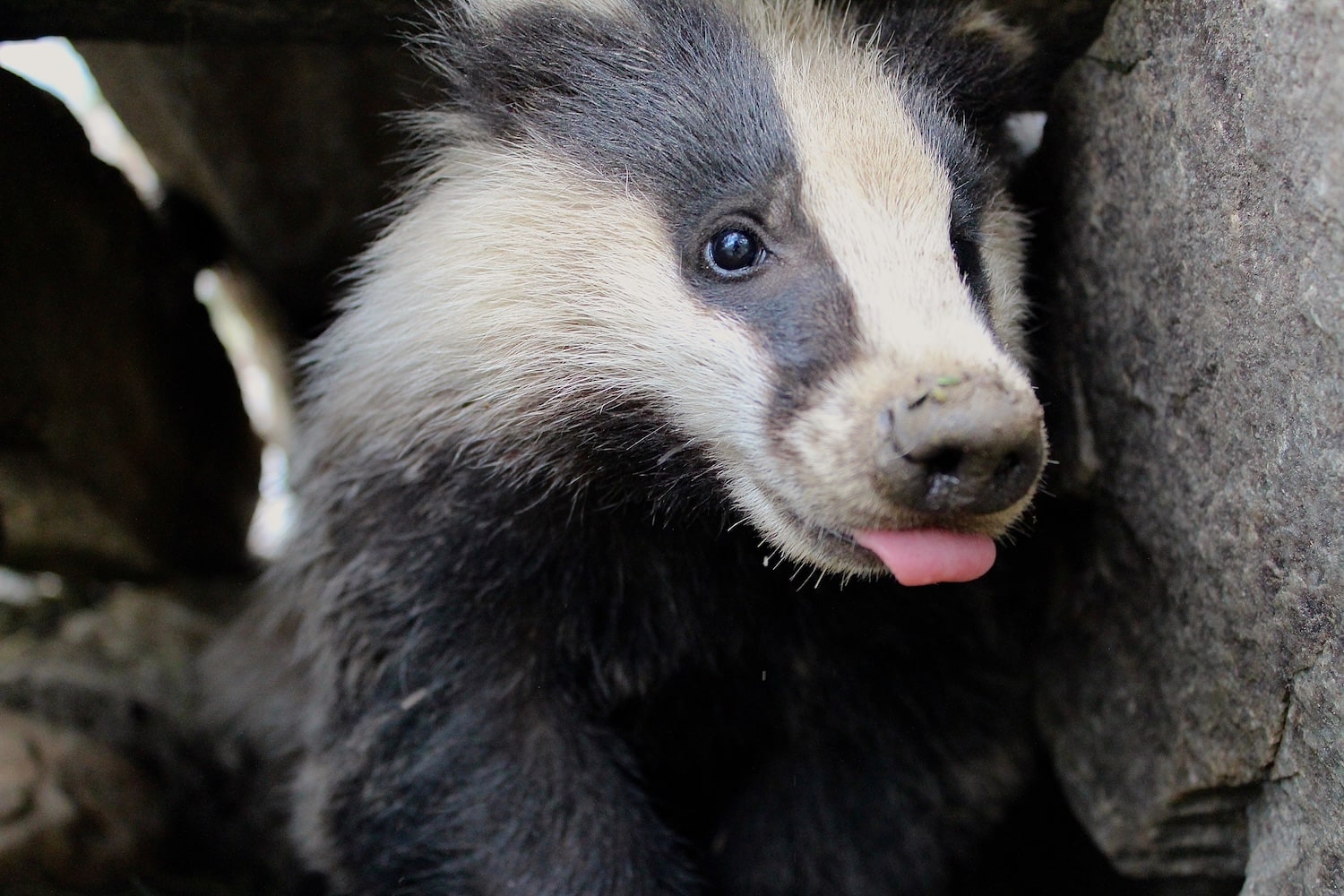
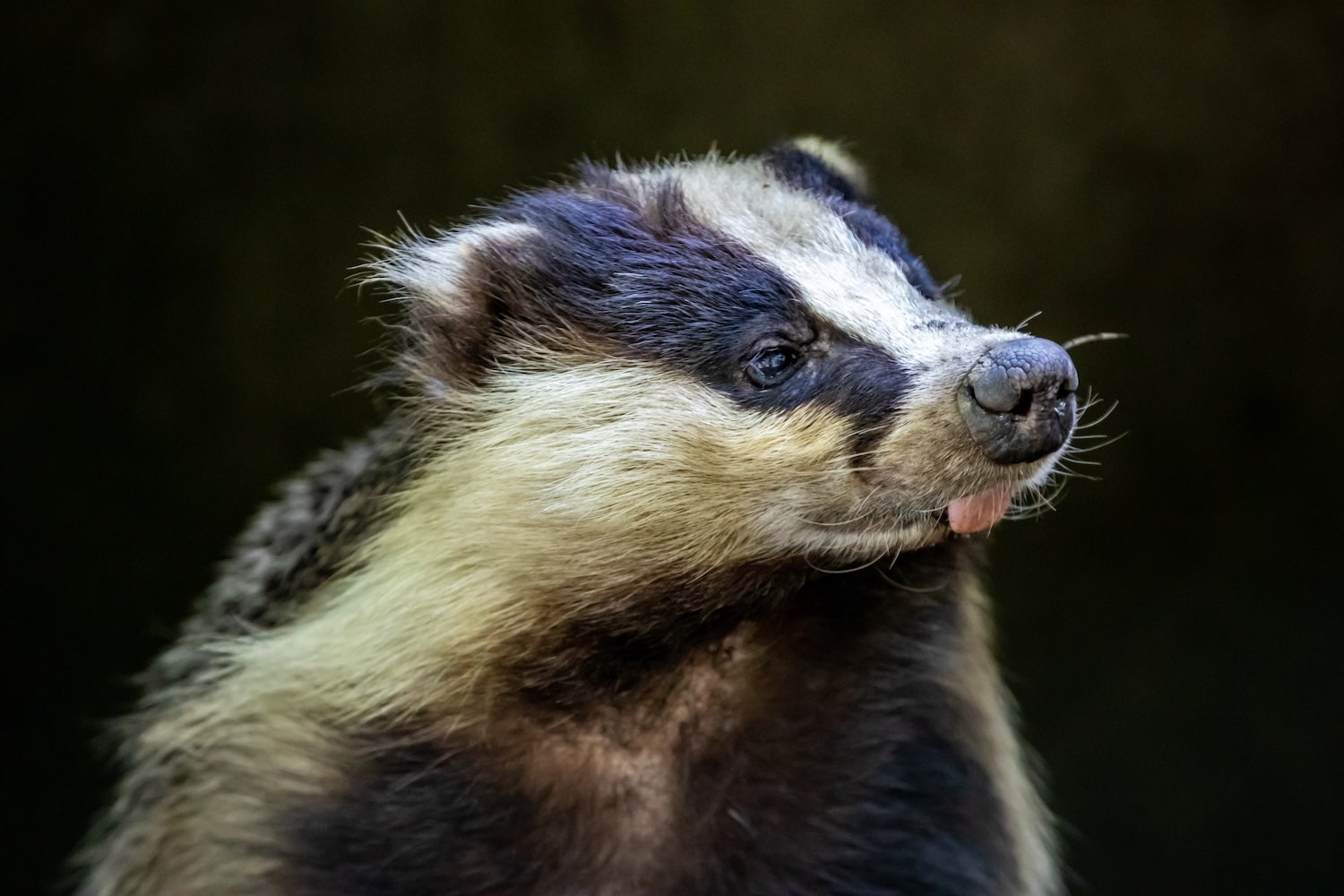
Also called the little bear because of the way it walks, its plantigrade paws, its physical structure and its very varied diet; fond of honey and fruit.
Description
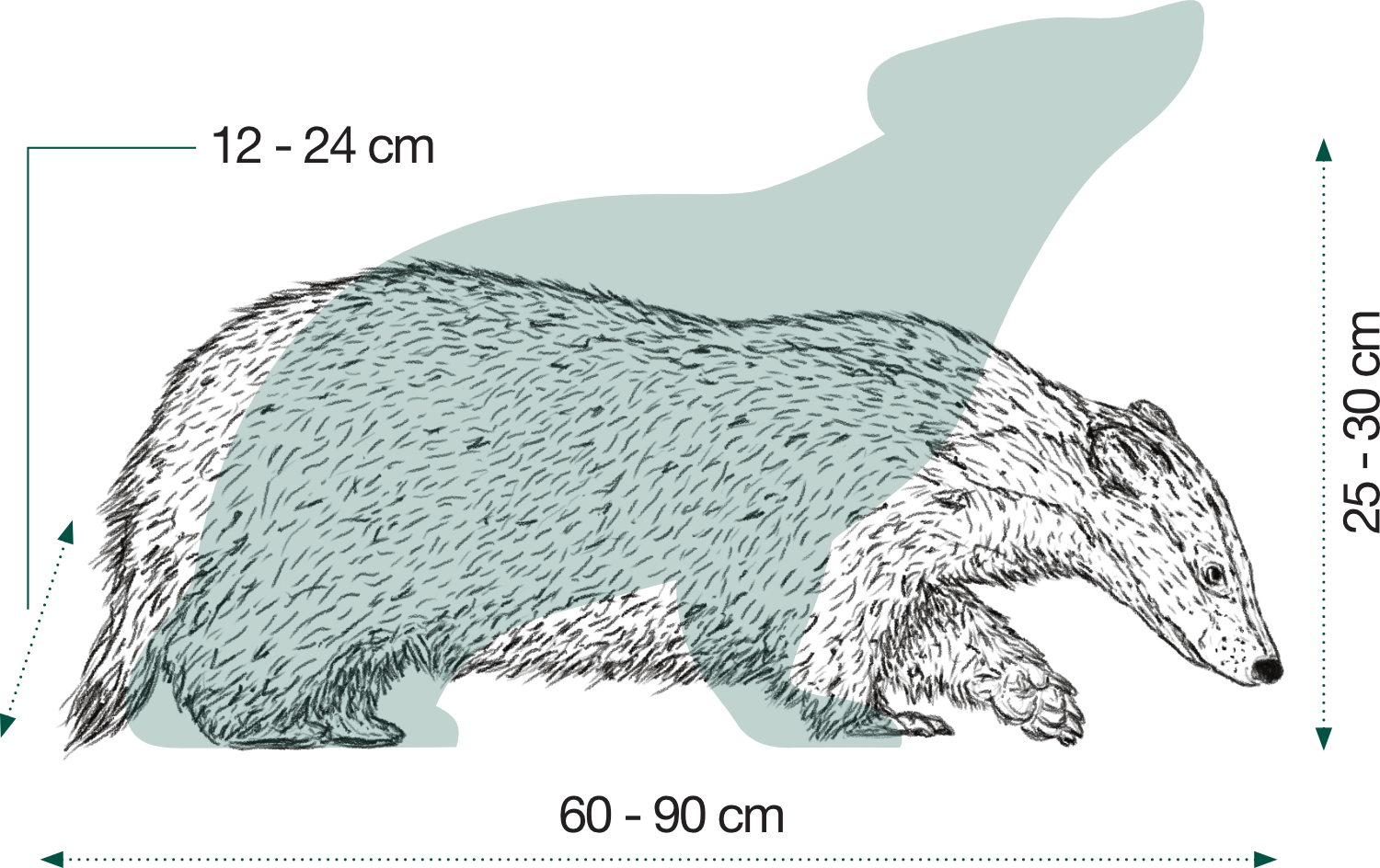
Anatomy: Mustelid with a stocky and robust body, with a small and elongated head with large ears, short legs and tail. The slightly curved snout resembles that of an anteater. It has clawed paws.
Teeth: The badger has 38 teeth. The badger’s teeth suggest an omnivorous diet, with prominent canines, small incisors, unspecialized carnassials and strong molars.
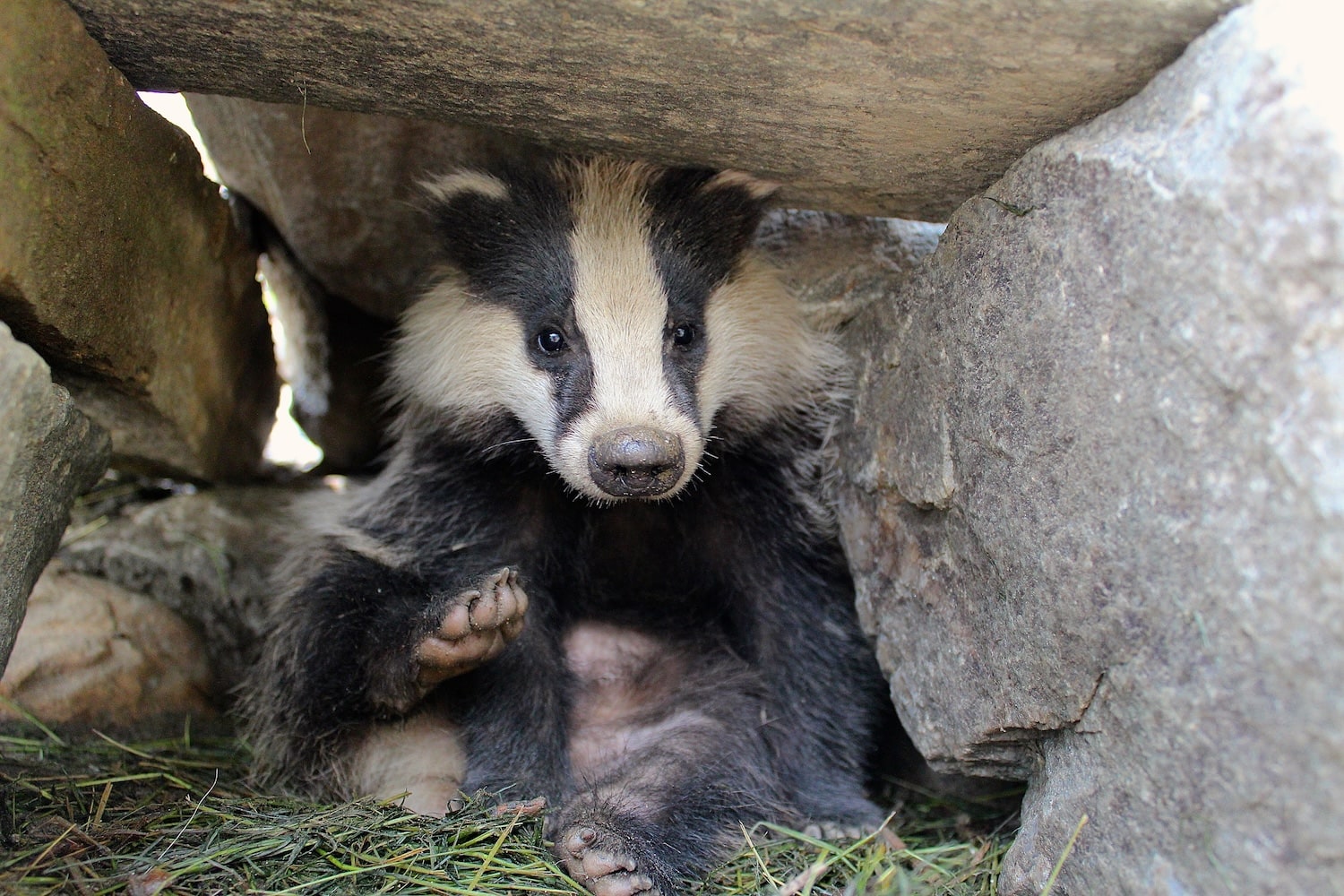
Coat: The fur is thick and bristly on the back and sides, com- posed of long bristles of 7–8 cm. The back is silvery-gray, with sides in shades of straw yellow. The tail is covered with very long and bristly hair of the same color as the back, while the belly is brown. Throat, neck, chest, and legs are black. It also has two bands that start from the upper lip, pass through the eyes and reach the ears, which are also black, forming the characteristic and unmistakable mask.
Habitat / Habits
Habitat: The badger is a typical inhabitant of wooded areas with rich undergrowth, it easily adapts to bushy areas, pastures and suburban areas such as gardens and parks.
Habits: This animal, which is essentially crepuscular/nocturnal, usually lives in groups of 5-6 individuals.winters.
Reproduction
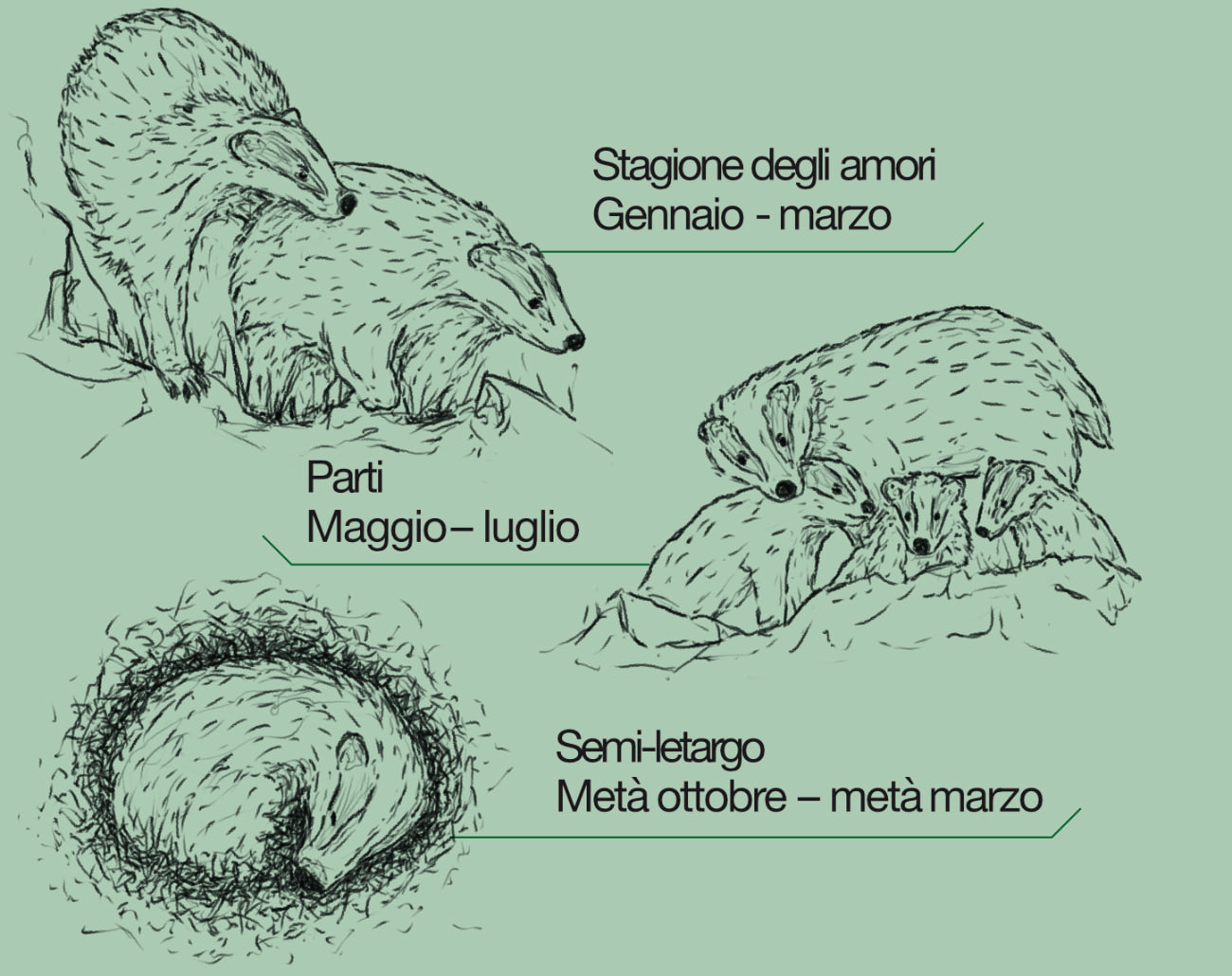
Species: Monogamous Sexual maturity: 2 years Reproductive period: January – May Gestation: 49 days (7 weeks) Births: March – July Number of cubs: 1 – 5
Diet
Omnivorous It feeds mainly on: earthworms, acorns, cereals, fruit, tubers, mushrooms, berries, insects, invertebrates, snails, mice, reptiles, amphibians, birds and meat coming mostly from carcasses.