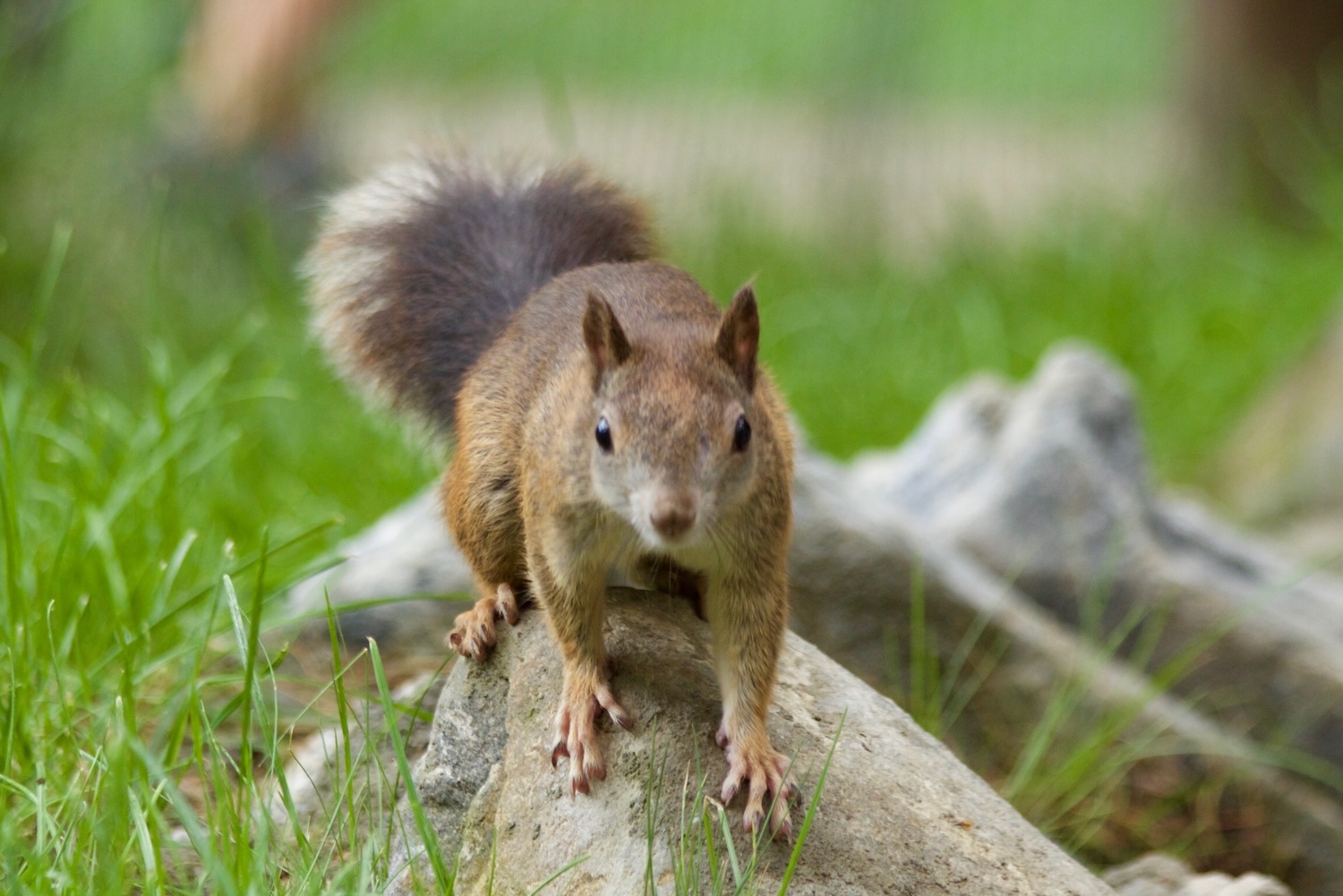
The long tail guarantees the squirrel an excellent ability to jump from one tree to another and to run along the branch-es, ensuring balance. It also has a thermal function, in fact it helps to maintain body heat during the sleep phase. During courtship, the tail serves as a visual signal and is raised and shaken in a very particular way.
Description
Anatomy: The squirrel is a small mammal that is characterized by agility and lively temperament. Its eyes are large and black. The front legs have 4 fingers and the back ones 5, equipped with nails that allow it to climb trees.
Teeth: Squirrels have incisors, premolars and molars. The incisors in these mammals are continuously growing and are filed during the feeding phases.
Coat: The coat coloration varies from reddish-brown to dark brown; these different shades are determined by temperatures, plant cover, nutrition and genetic factors.
The species is at risk of extinction, supplanted by the American gray squirrels that are increasingly seen in the parks and public gardens of large cities.
Habitat / Habits
Habitat: It prefers hilly and mountainous environments rich in conifers and broad- leaved trees. In the mountains it climbs up to the limit of the arboreal vegetation. Habits: It moves mainly during the day, jumping from one tree to another. During the winter the squirrel slows down its metabolism to survive the harsh winters.
Reproduction
Species: Polygamous Sexual maturity: 1 year Reproductive period: February – March / June – July Gestation: 38 – 38 days (about a month) Births: April – August Number of cubs: 3 – 4
Diet
Omnivorous The squirrel feeds on hazelnuts, acorns, buds, sprouts, and mushrooms; it prefers seeds that the animal manages to extract with great skill from pine cones, but it does not disdain small insects, eggs, and nestlings of birds.