Chamois

[ Rupicapra rupicapra ]

Classification

Kingdom:

animalia

Phylum

chordata

Class:

mammalia

Order

artiodactyla

Family

bovidae

Genus

rupicapra

14-16

years in
nature

18-20

years in
captivity

Female

35-40 kg

Male

45-50 kg

Maximum speed

50-60 km/h

Verse

Whistle

Curiosity

The chamois has a large heart.

The rather voluminous heart is equipped with thick muscle walls that guarantee the maintenance of a heart rate of 200 beats per minute and a high blood flow. This allows the chamois to climb long and steep slopes without excessive effort even at high altitudes where the air is thinner.

Description

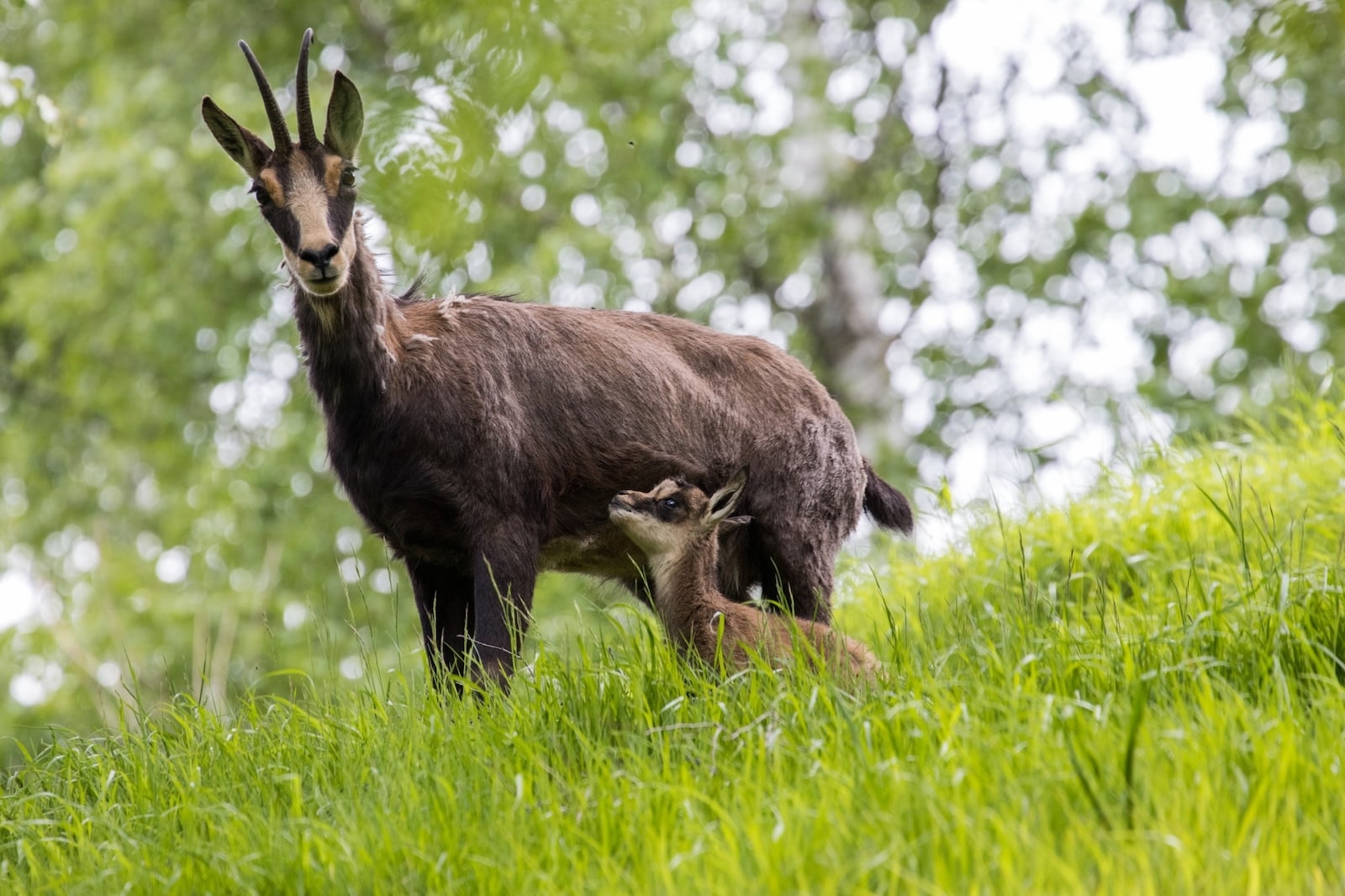
Anatomy: The bidactylous hoof allows the exploitation of the smallest holds on the rock; the soft pads, increasing the friction, prevent falls and slips downhill. The toes of the hoof are spreadable and equipped with an interdigital membrane that provides a wider support surface, allowing agile movements even on the snow. The horns, relatively small and of a characteristic dark black, are permanent, common to both sexes and have a typical hook shape.

Teeth: The adult chamois has 32 teeth, divided into incisors, canines, premolars and molars. The large surface of the molars allows the ingested food to be broken up, facilitating digestion.

Coat: In winter the hair is long, soft and thick, with a dark brown to blackish coloring which, thanks to the dark shade, largely absorbs the sun’s rays, guaranteeing the animal an additional source of heat. The only light parts are the nasal area, the ventral area and the anal mirror. In summer the coat is characterized by shorter and rougher hairs, with shades ranging from pale yellowish to reddish gray. In contrast, the limbs and the facial mask are darker in color.


Habitat /
Habits

Habitat: The Alpine chamois usually lives at altitudes between 1000 and 2800 m
in an environment characterized by coniferous and/or broad-leaved woods interspersed with rocky and steep walls.
Habits: The chamois is mainly diurnal, rarely active during the night.

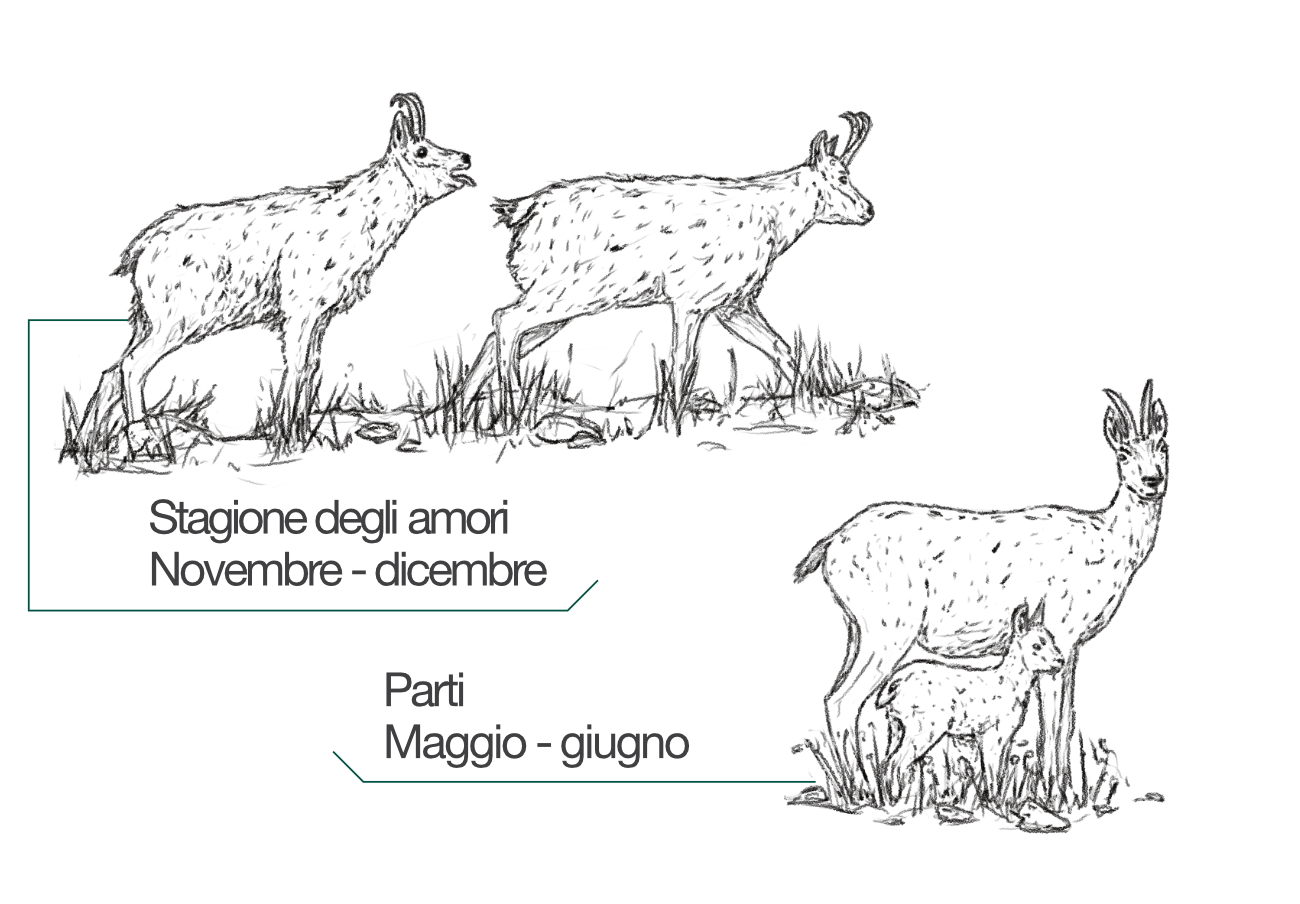
Reproduction

Species: Polygamous
Sexual maturity: 2 – 3 years
Reproductive period: November – December
Gestation: 150 – 160 days (about 5 – 6 months)
Births: May – June
Number of cubs: 1

Diet

Herbivorous
In autumn/winter: herbaceous plants, shrubs, dry herbs found by digging with hooves in the snow, lichens, needles and buds of fir and pine trees.
In spring/summer: sprouts, fresh herbs, and inflorescences. The selected species belong mainly to the grass family and to the herbaceous group.

Chamois

Alpine Ibex

Red Deer

Roe deer

Wild Boar

European hedgehog

Marmot

The mountain hare and the common hare

Badger

European squirrel

Trout

Golden eagle

Snowy Owl

Tawny Owl

Barn Owl

Eurasian eagle-owl

European Jay