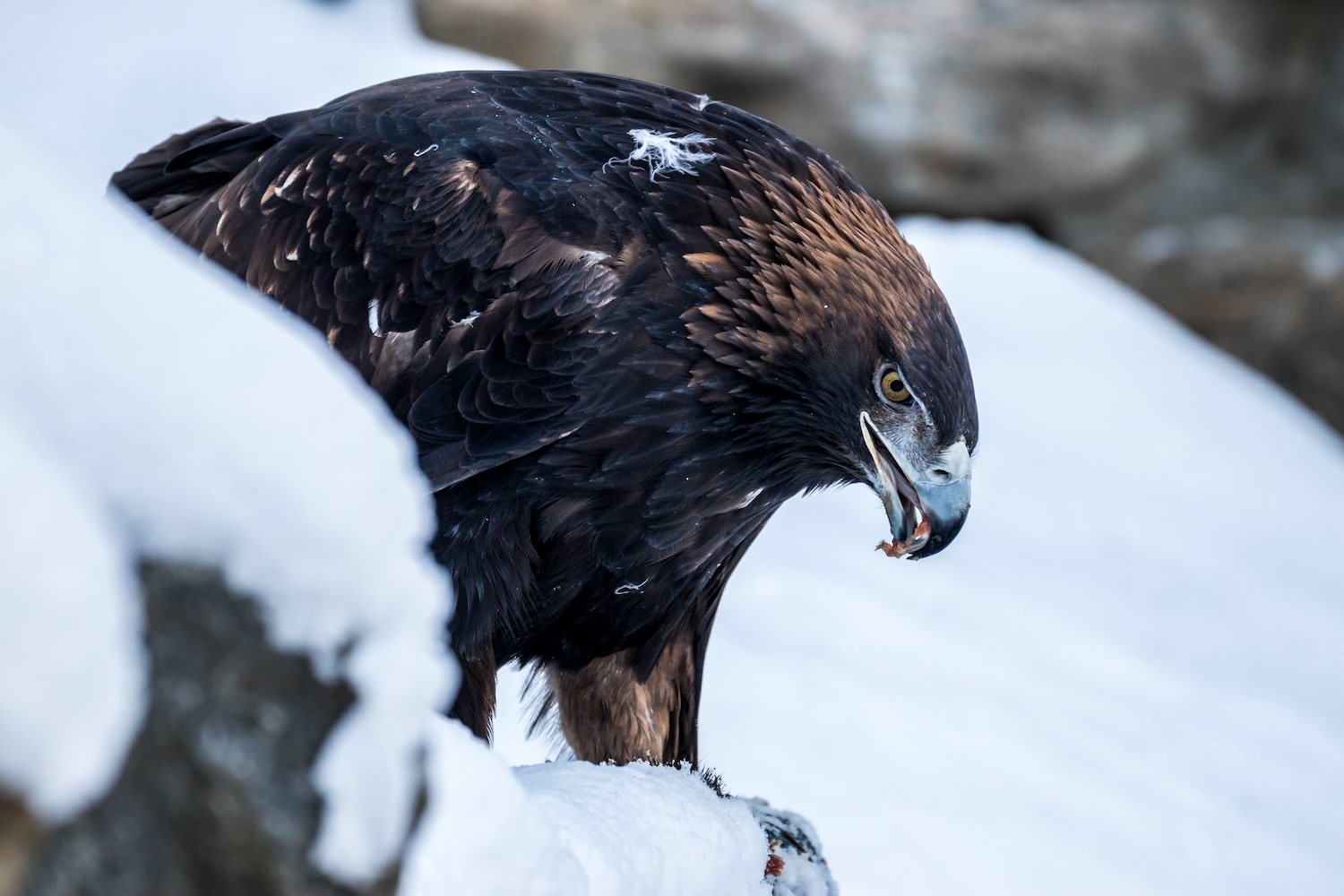
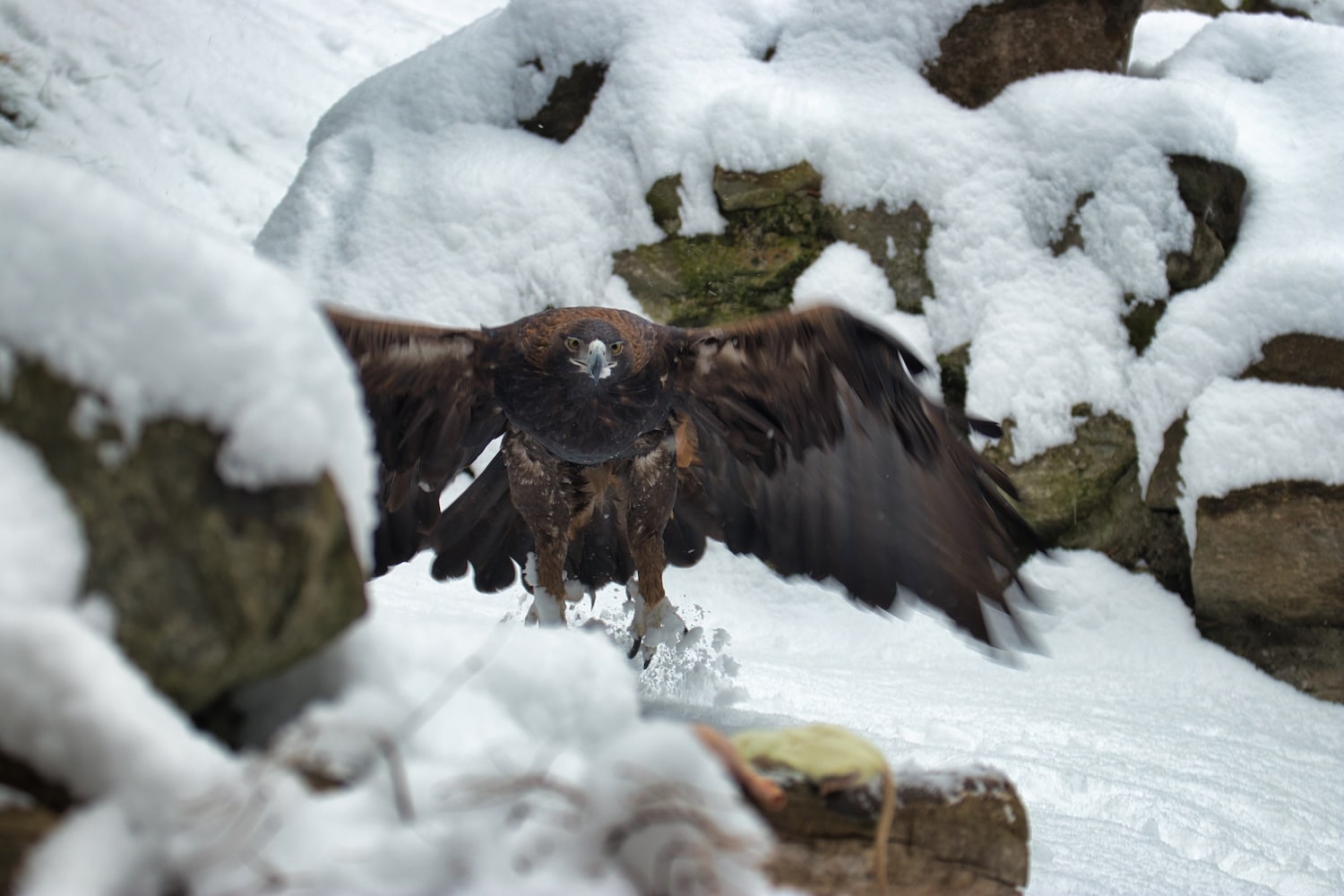
Golden eagle

[ Aquila chrysaetos ]

Classification

Kingdom:

animalia

Phylum

chordata

Class:

aves

Order

accipitriformes

Family

accipitridae

Genus

Eagle

15-20

years in
nature

40

years in
captivity

Female

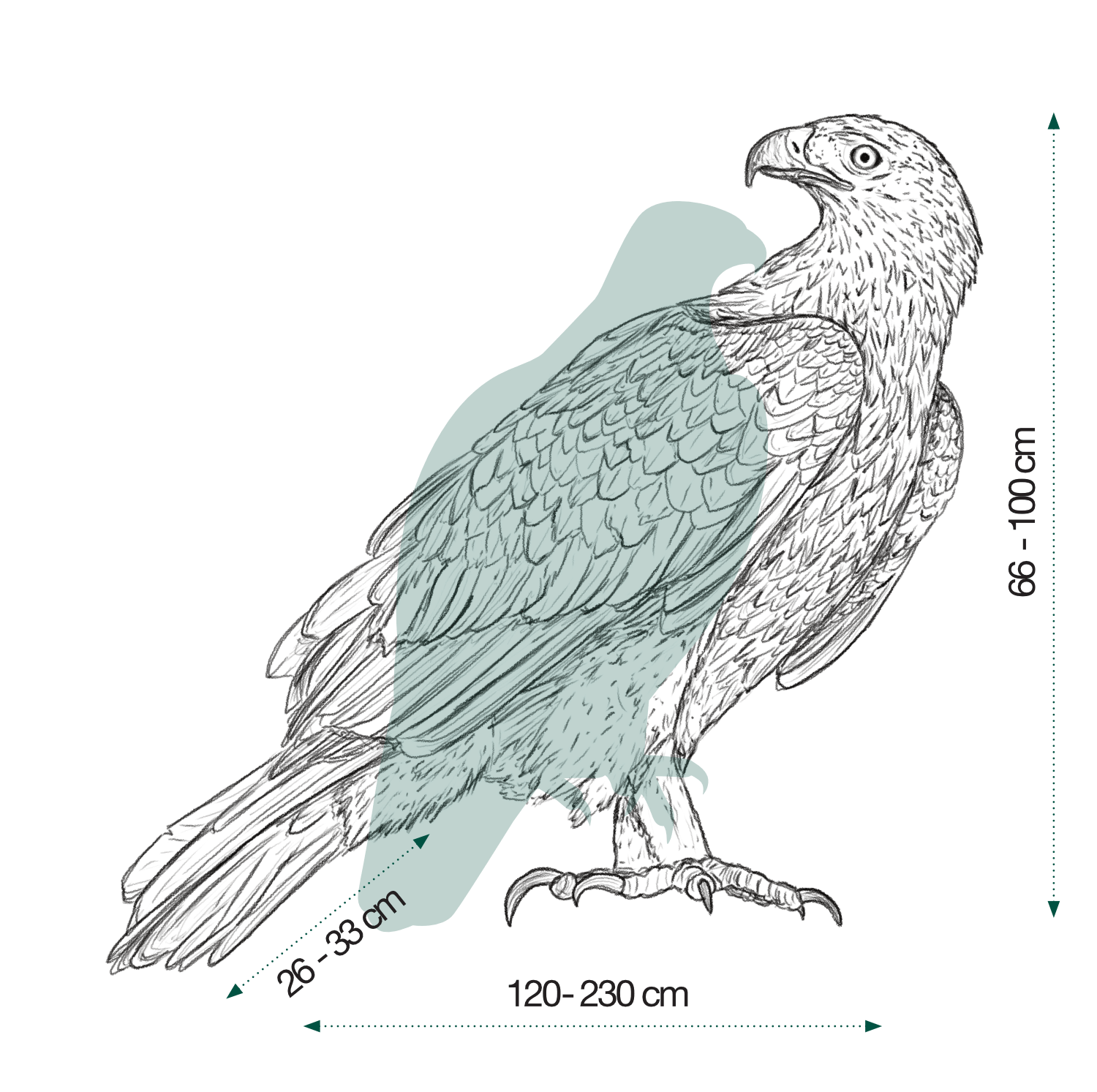
3-7 kg

Male

2,5-5 kg

Maximum speed

130/150 km/h

Verse

Scream/shriek

Curiosity

The golden eagle.

Literally, chrysaetos means golden eagle. This nickname can be attributed to the presence of beautiful golden streaks on the animal’s head. In ancient mythology, and according to different cultures, it was considered the bearer of lightning, an image of great power, of great spirit and associated with the sun.

Description

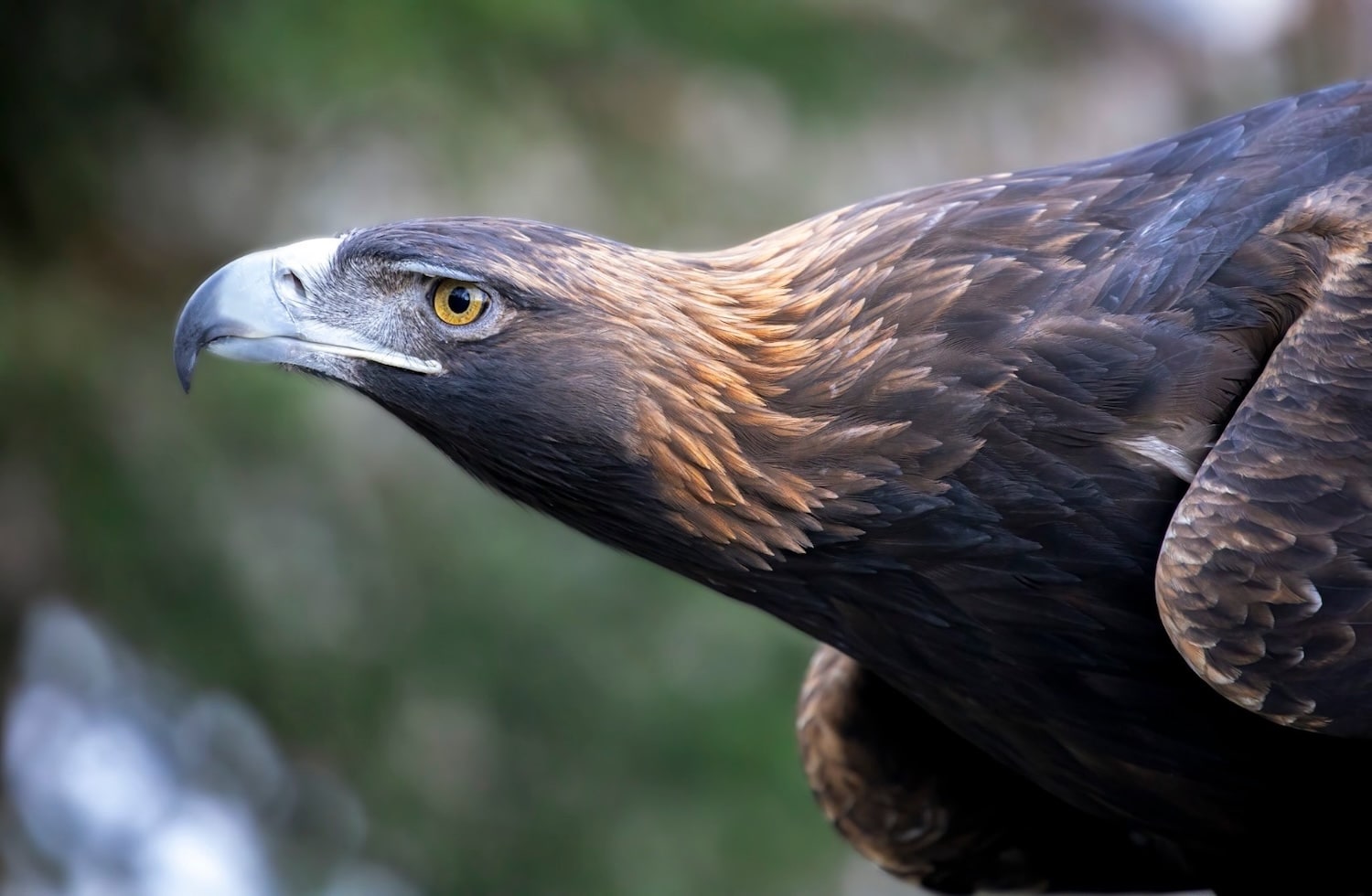
Anatomy: One of the most powerful birds of prey in the world. Its robust structure allows it to successfully attack prey often heavier than itself and, despite its imposing size, the golden eagle is a very agile flyer. The legs have the typical characteristics of birds of prey, with short fingers and large claws capable of injuring and killing prey. Equipped with a very sharp sight (six times that of humans, with a 300-degree field of view) that allows the golden eagle to identify its prey even at a considerable distance.

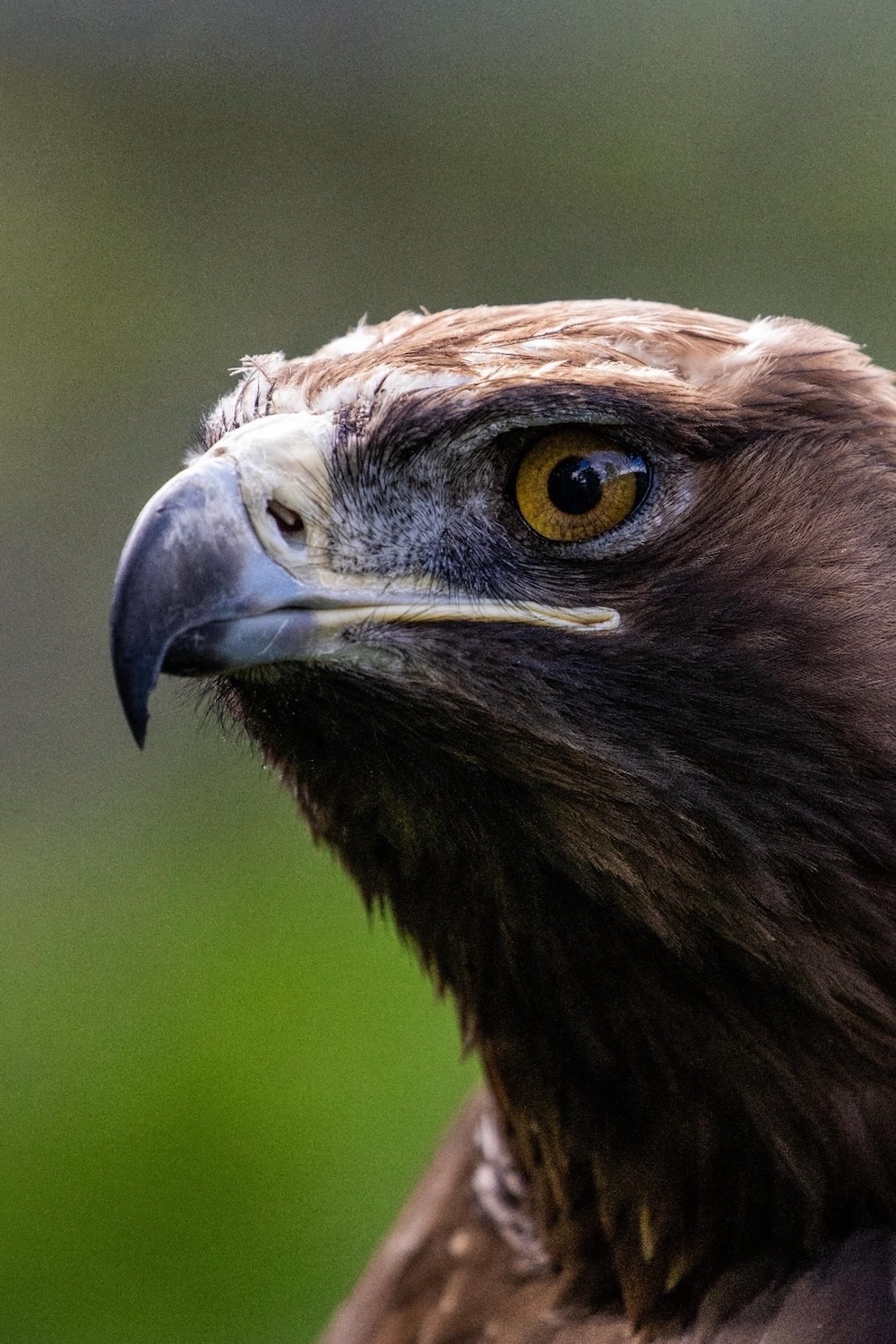
Beak: Long, stocky, curved downwards, powerful and sharp, useful for tearing flesh. It is also used to grab branches, clean feathers, feed the young, fight and defend itself.

Plumage: The color varies according to age and the adult dress is completed at 5 years of age. Depending on the age and sex of the animal, the color of the feathers ranges from brown to dark brown. The head, on the other hand, is golden brown. The young have a blackish-brown plumage with white half-moon spots in the center of the wings and a white tail edged in black.

Habitat /
Habits

Habitat: It lives on mountainous reliefs characterized by rocky walls from which it overlooks open and semi-wooded environments. Their presence in a specific environment is closely related to the abundance of prey.

Habits: The golden eagle is most active in the middle of the day.

Reproduction

Species: Monogamous
Sexual maturity: 4 – 5 years
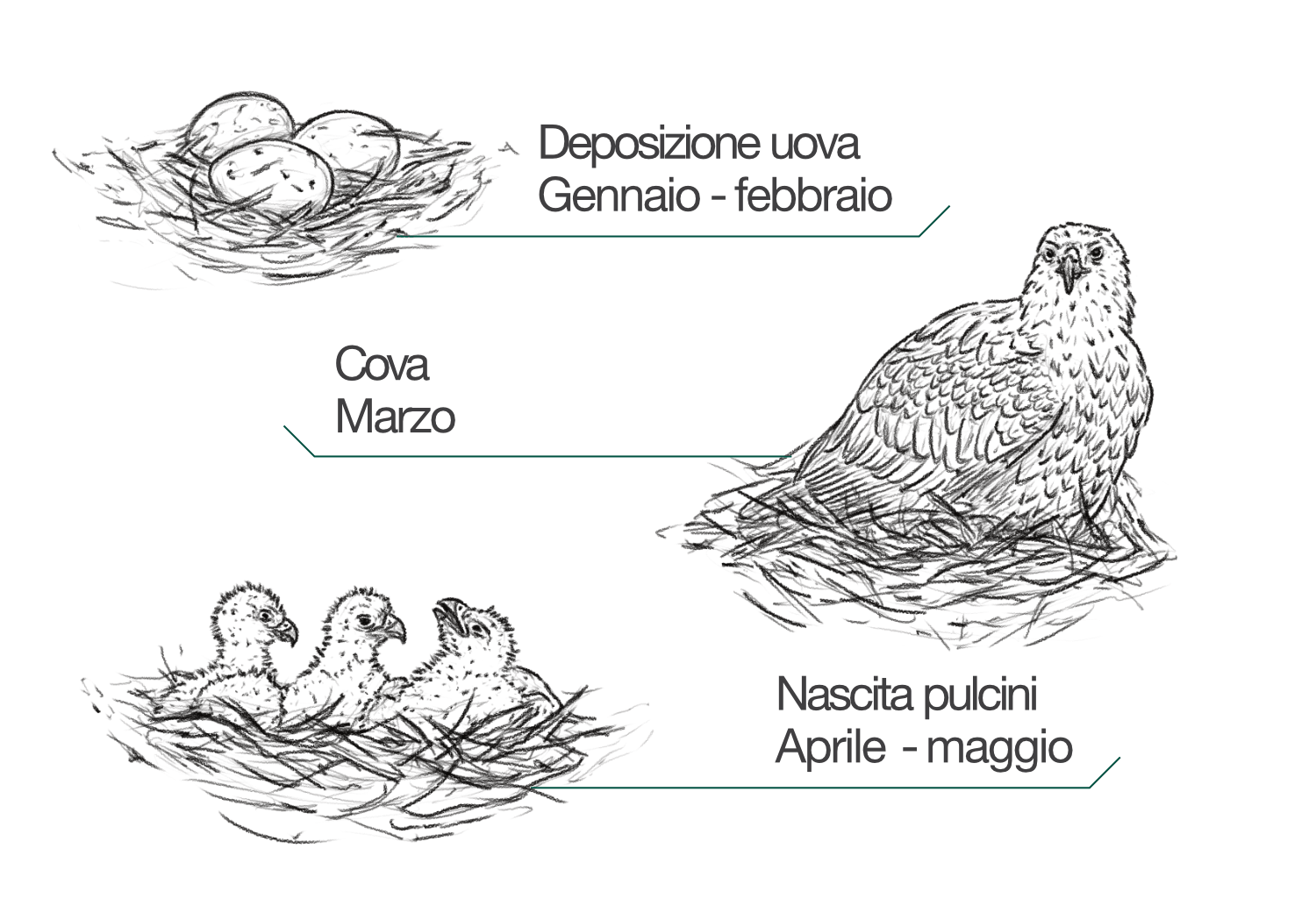
Mating season: January – February
Eggs hatching period: 43 – 45 days
Births: March – April
Number of eggs: 2

Diet

Carnivorous
Mammals: hares, marmots, wild rabbits, squirrels, foxes, roe deer and chamois.

Other animals: wood pigeons, crows, capercaillie, black grouse, partridges, quails, snakes, frogs and toads.

Chamois

Alpine Ibex

Red Deer

Roe deer

Wild Boar

European hedgehog

Marmot

The mountain hare and the common hare

Badger

European squirrel

Trout

Golden eagle

Snowy Owl

Tawny Owl

Barn Owl

Eurasian eagle-owl

European Jay