Home » Fox
Fox
[ Vulpes vulpes ]
Curiosity
You are as smart as a fox!
Given its great ability as a predator with excellent levels of hunting success, the fox is a symbol of cunning and clever- ness. This canid has in fact developed a strategy to prey on the hedgehog despite its quills. It pees on the hedgehog, forcing it to open up, and then bites its muzzle to eat it.
Description
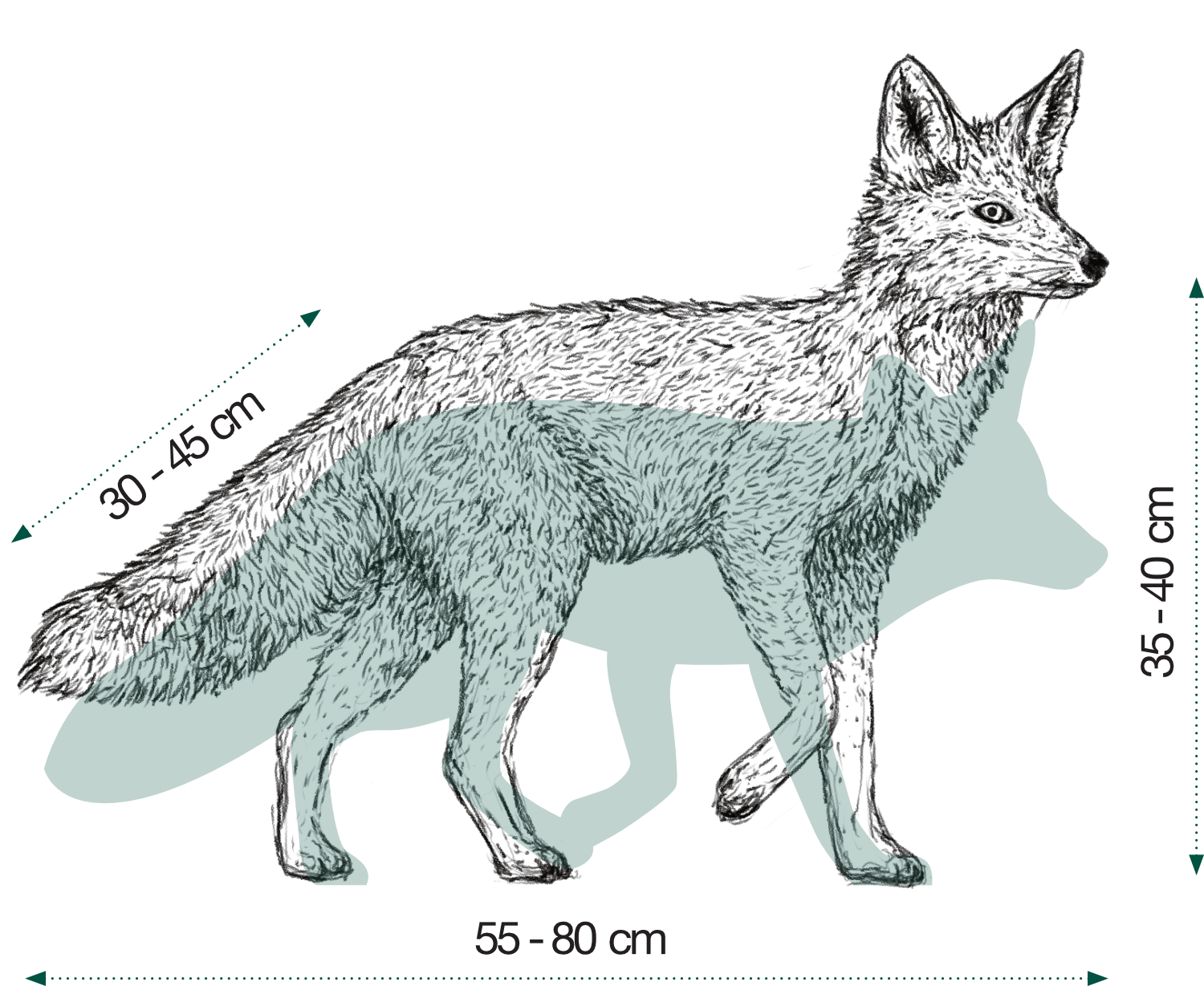
Anatomy: The fox has a slender build with relatively short legs, a small head, an elongated snout, and straight, pointed ears. The most obvious feature is its thick and long tail with a white tip.
Teeth: The fox has 42 teeth divided into 12 incisors, 16 premolars, 10 molars and 4 canines that help it grab the prey and kill it. The teeth are typical of canids, therefore very sharp, with upper canines so long that they almost reach the lower level of the jaw when the mouth is closed.
Coat: The color, often reddish, goes from yellow to brown with grayish-brown shades, depending on the individual and the regions. The throat, belly and the tip of the tail are white. The fox’s coat is much thicker during the winter months. Thanks to this peculiarity, it can survive without hibernating.
Habitat /
Habits
Habitat: It adapts to any environment, but is most commonly found in woods and forests. It is an incredibly adaptable animal with a very flexible behavior, for these reasons it has managed to adapt and live even in urban environments, in close contact with humans.
Habits: Shy animal with predominantly crepuscular/nocturnal habits.
Reproduction
Species: Monogamous
Sexual maturity: 2 years
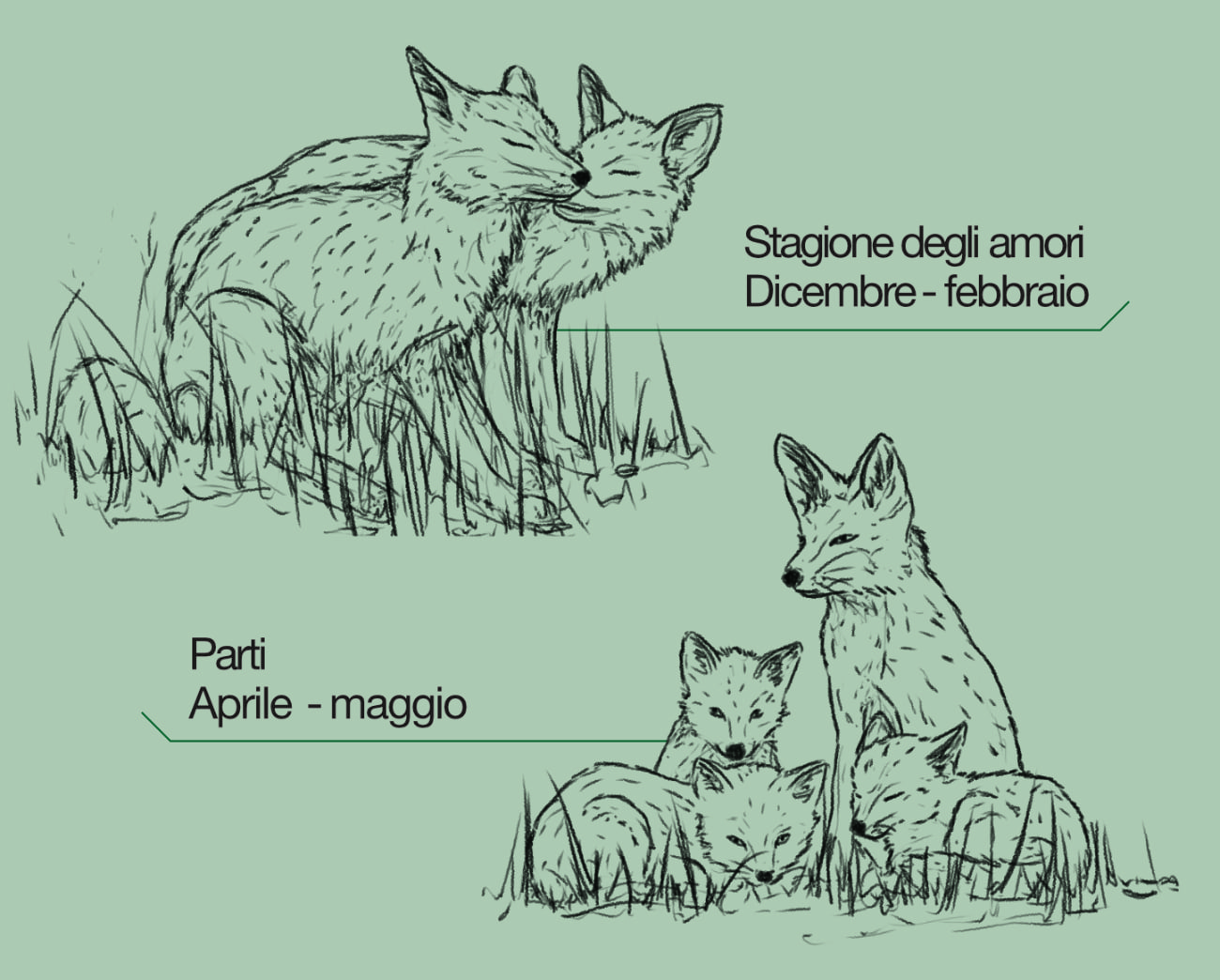
Reproductive period: December – February
Gestation: 49 days (7 weeks)
Births: April – May
Number of cubs: 2 – 5
Diet
Carnivore
Although classified as a carnivore, the fox is in fact an omnivore. Its diet is very varied and includes: invertebrates, small mammals, birds, eggs, small amphibians, reptiles, berries and other types of fruit. During times of scarcity, it also eats carrion and food waste.