Ibexes have very developed muscles, especially in the front part of the body. This physical feature allows them to push their center of gravity down, maintaining a perfect balance even on the steepest surfaces. The combination of powerful muscles and adaptable hooves gives the ibexes extraordinary traction, allowing them to climb vertical walls without any difficulty.
Description
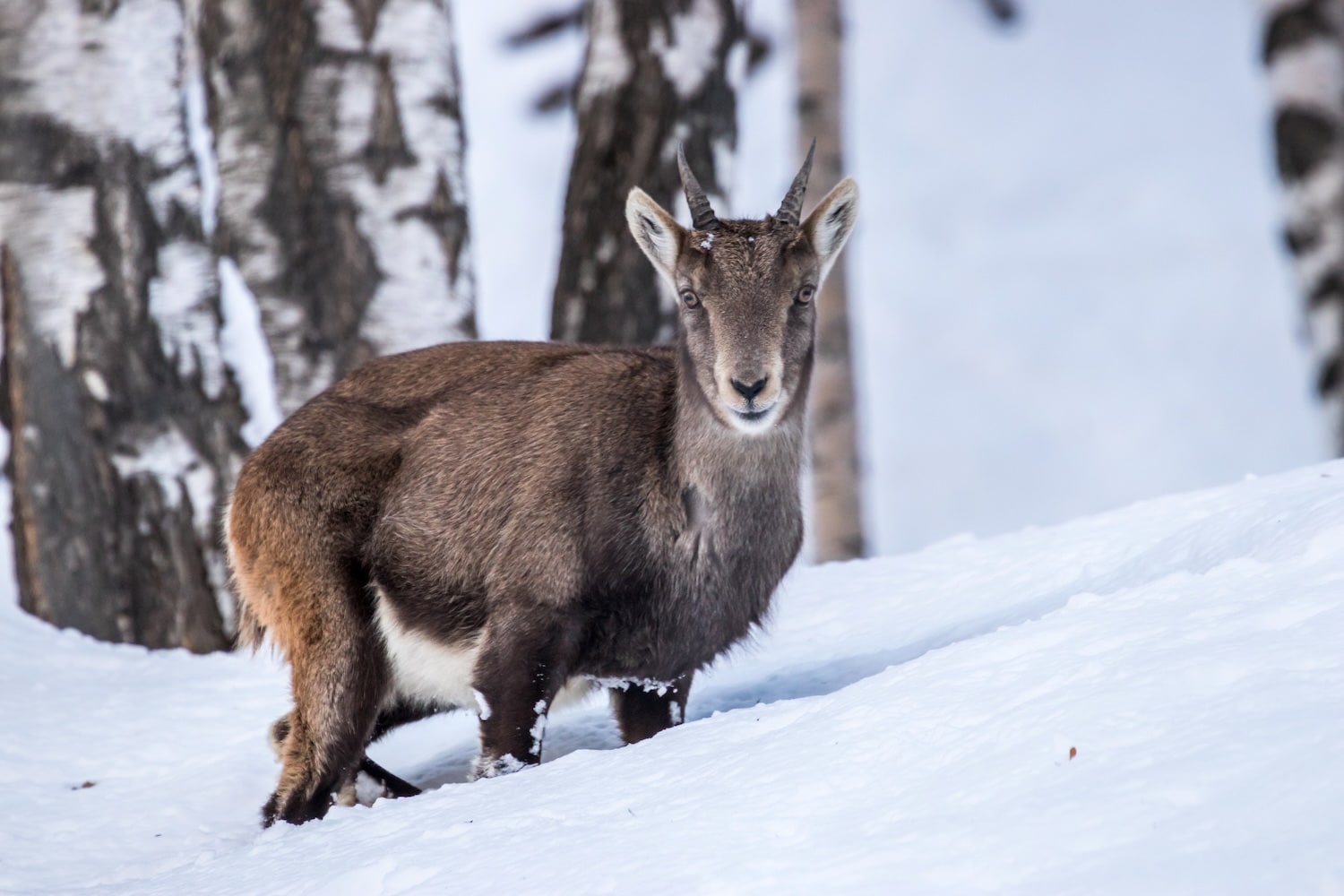
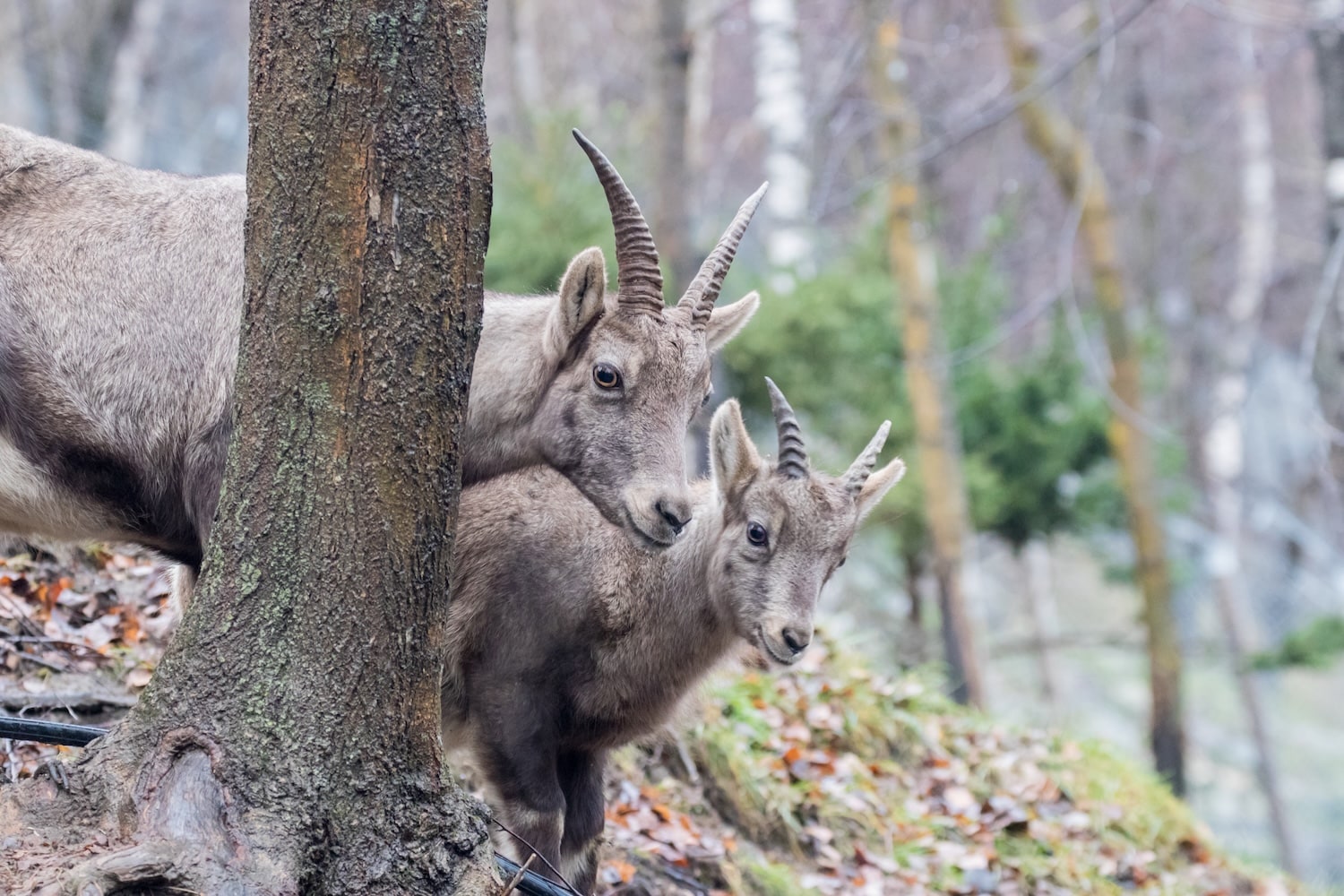
Anatomy: One of the peculiar characteristics of the ibex is the great difference between males and females: the latter are in fact much smaller and do not have large horns like those of the males. It is a wild goat with a short and wide head, robust and massive, possessing extreme agility and balance, even on treacherous and rugged terrain.
Teeth: The ibex has 32 teeth divided into incisors, canines, premolars and molars. As in all bovids, the upper incisors are absent in the ibex.
Coat: The winter coat of adult males is usually dark brown, with even darker legs and a light belly. The tail is also dark and stands out on the whitish perianal area. Females are generally lighter and have a more homogeneous coloring. The summer coat of the beaks is an iron-gray color over the entire back, up to the belly which is instead white; on the back there is a dark median band.
At the end of the 19th century, the ibex was at risk of extinction due to intensive hunting and the loss of its habitat; today, however, it is no longer at risk thanks to conservation and protection efforts.
Habitat / Habits
Habitat: High altitude rocky environments, above the tree line, steep rocky ridges rich in herbaceous vegetation, open and sunny areas with the presence of rocky outcrops.
Habits: It is a gregarious animal, the herds of males remain separated from those of the females and join them only during the reproductive period. It has purely diurnal habits. Metabolism to survive the harsh winters.
Reproduction
Species: Polygamous Sexual maturity: 3 years Reproductive period: December – January Gestation: 168 days (6 months) Births: June Number of cubs: 1 – 2
Diet
Herbivorous It prefers: grasses, legumes, rhododendron leaves, mosses and lichens.