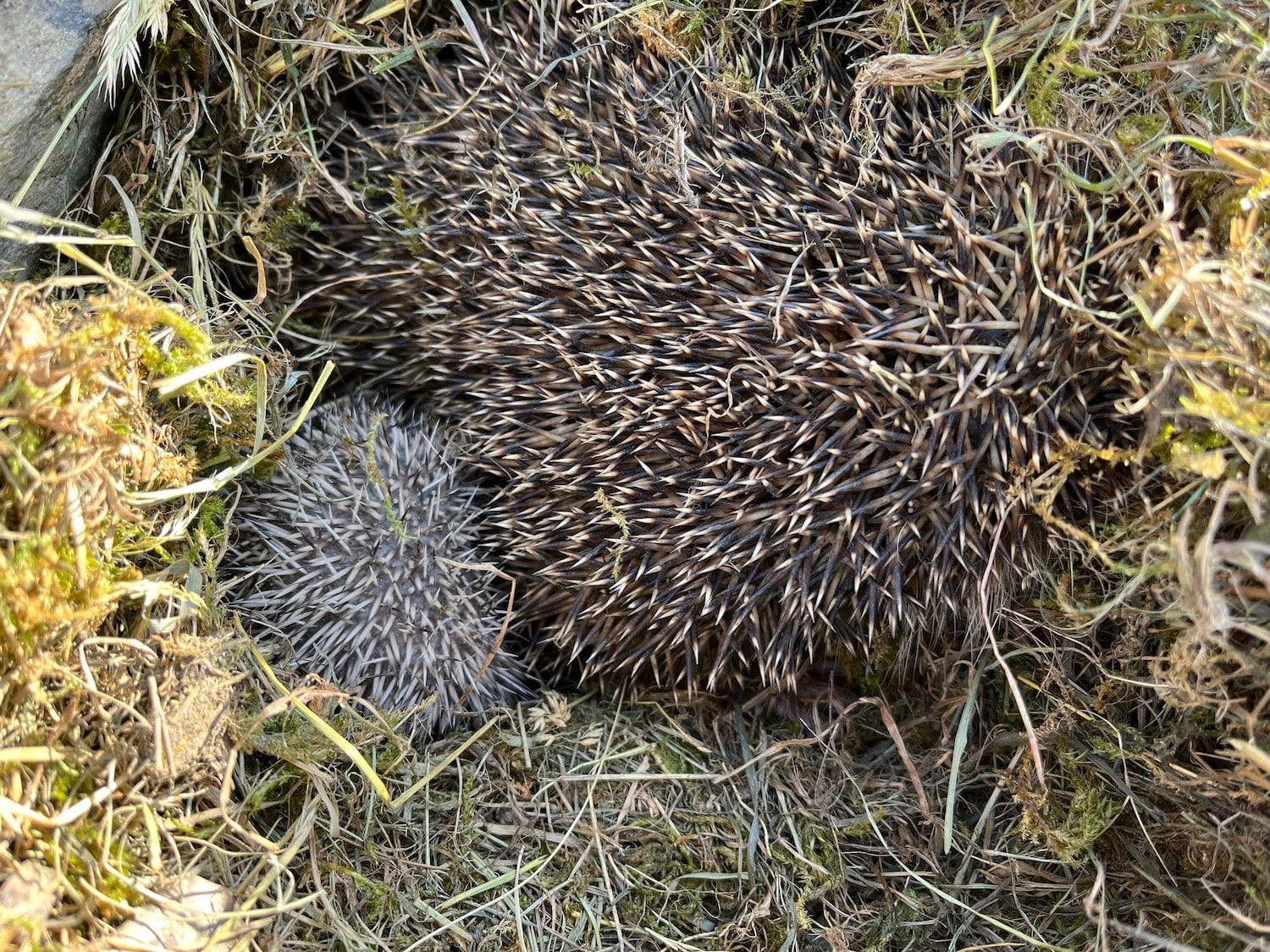
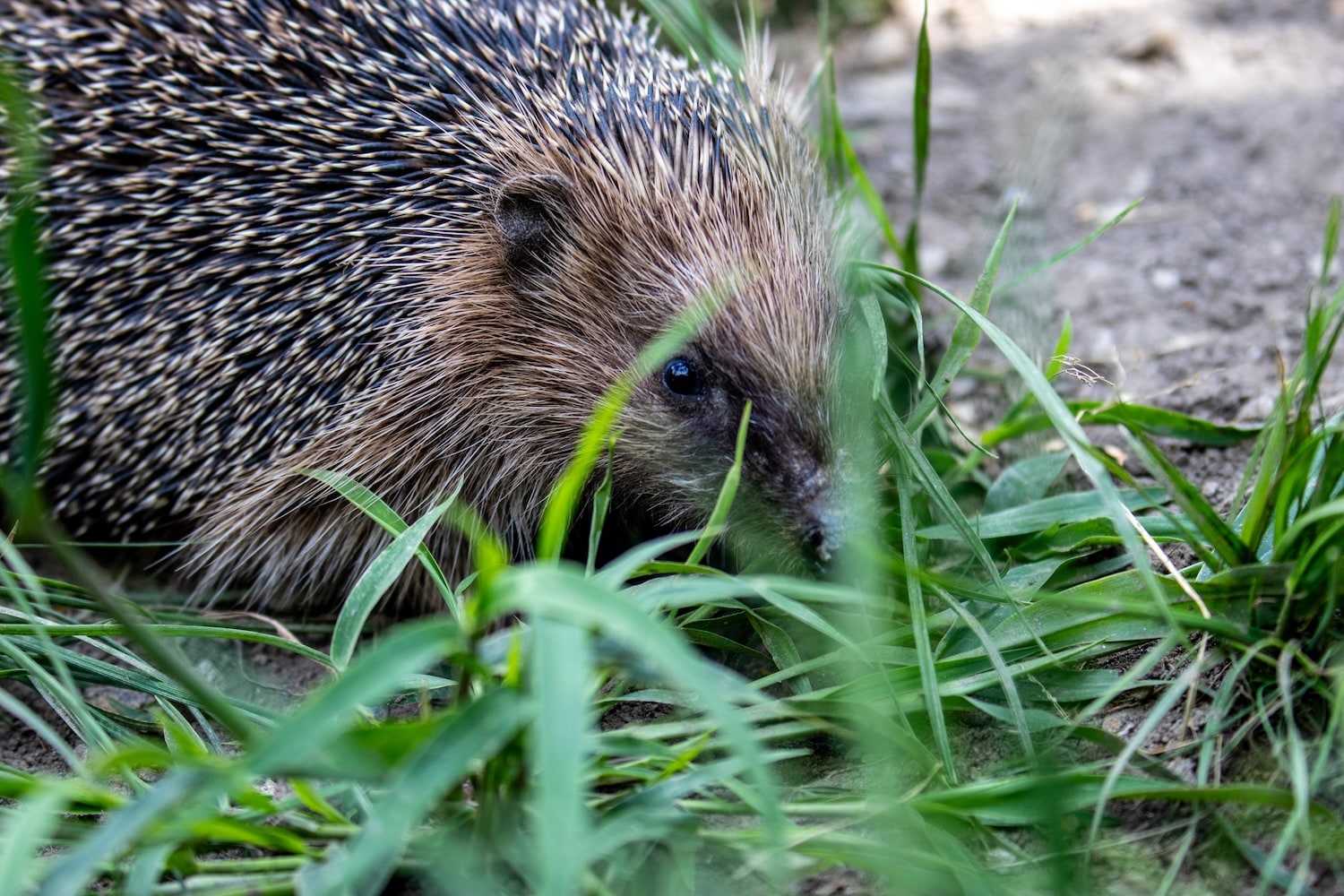
In adulthood, the hedgehog has approximately 6000/8000 quills, each measuring 2-3 cm in length. The typical hedge- hog defense strategy consists in curling up by pushing the quills outwards. The hoglets are born without quills, naked, white and initially blind. After a few days, the quills emerge, but they only become rigid and prickly after a month.
Description
Anatomy: The hedgehog has an elongated skull, a stocky body and short legs. The hedgehog’s main sense is smell. The olfactory channels are constantly humidified by a mucous membrane. The sense of touch is also well developed; sight is less important for the hedgehog.
Teeth: Its teeth are complete, consisting of 44 sharp and cutting teeth and is particularly suitable for shredding all types of food.
Coat: The hedgehog is largely covered with quills. They vary in color with the change of season: in the cold seasons they take on a darker brownish color while in the warm seasons they have a lighter color. The hair also changes, which depending on the season takes on a lighter or a darker color.
Habitat / Habits
Habitat: It prefers the edges of the woods, the bushy areas and the woods rich in undergrowth. It is common in suburban and rural areas, locally abundant in urban gardens. Habits: The hedgehog is an exclusively nocturnal animal. During the day it rests in its den and then goes in search of food at night.
Reproduction
Species: Polygamous Sexual maturity: 2 years Reproductive period: March – April / August Gestation: 40 days Births: April – September Number of cubs: 2 – 8
Diet
Omnivorous It follows an omnivorous diet. It feeds on insects, earthworms, small rodents and snails, but in case of need it also eats acorns, berries and fruits. It is one of the best allies in the fight against pests in vegetable gardens and gardens.