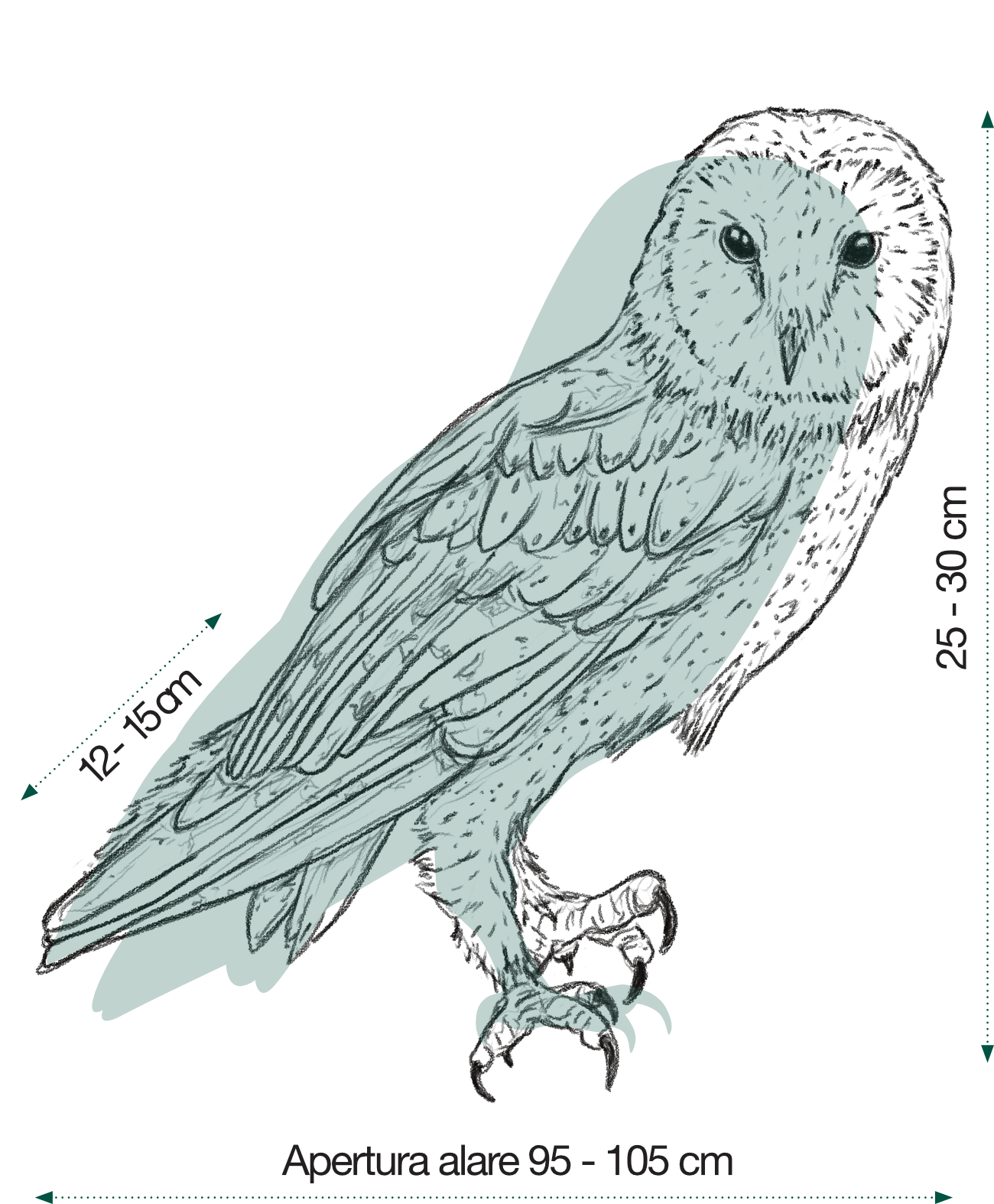
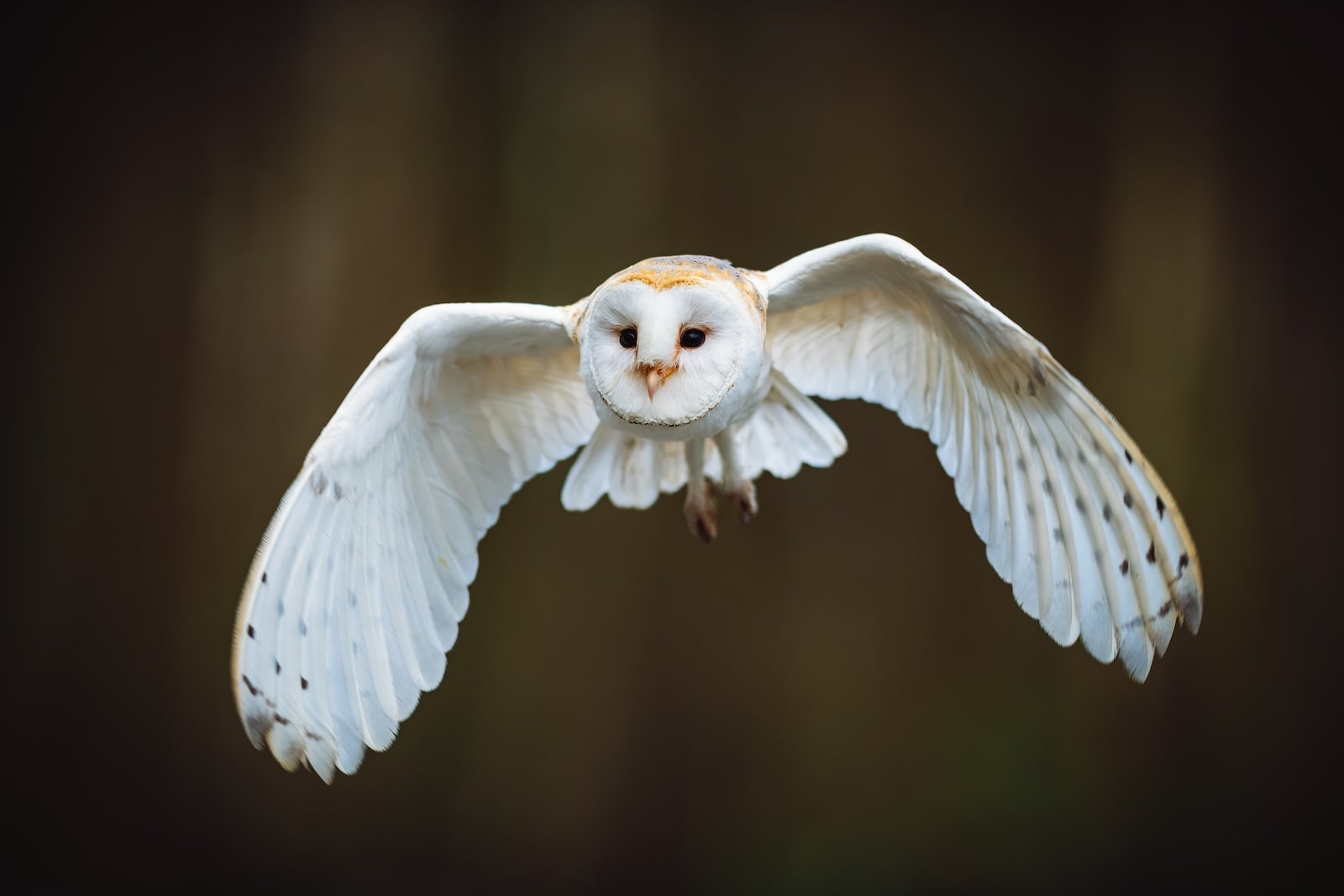
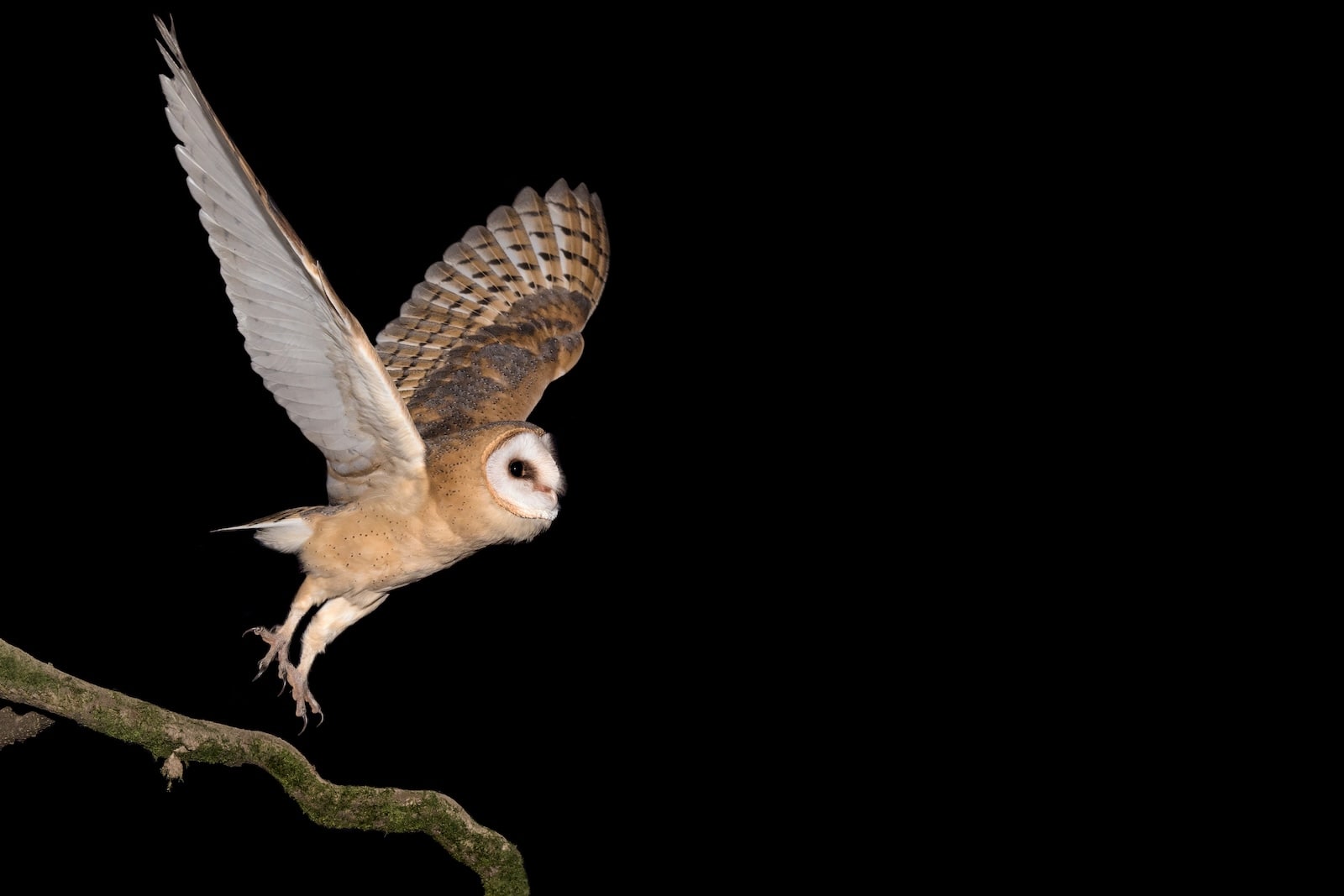
Anatomy: A medium-sized nocturnal bird of prey, with a slender body, long wings and a head characterised by a heart-shaped facial disc. It has dark, forward-facing eyes and an extremely keen sense of hearing, enabling it to locate prey even in the dark.
Beak: Short, curved and sharp, suited to tearing prey apart; strong claws for grasping and holding it.
Plumage: Light in colour, with a speckled yellow-ochre back and white underparts; soft and well-suited to silent flight.
Habitat / Habits
Habitat: It is a very adaptable species and can live in a variety of habitats, as long as there are shelters for the nest and a good availability of prey. They often live in open fields, grasslands and farmlands.
Habits: during the day, it rests in sheltered places such as tree cavities, barns, abandoned buildings, or under roofs, where it remains quiet and protected. This bird is nocturnal, so its activity cycle is reversed compared to many other bird species, which are diurnal.
Reproduction
Species: Monogamous Sexual maturity: 2 years Mating season: March Eggs hatching period: 29 – 34 days Births: May-June Number of eggs: 4 – 5
Diet
Carnivorous Mammals: mice, squirrels. Other animals: small birds, amphibians, reptiles and insects.